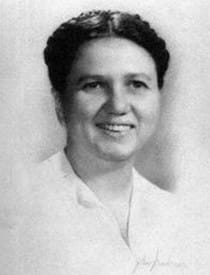
Photo: Unknown author / Public domain (source: Wikimedia Commons)
Ruth Crawford Seeger was born on July 3, 1901 in East Liverpool, Ohio, United States and was credited as a composer. Ruth Crawford Seeger died on November 18, 1953 at the age of 52. Awards on record include Guggenheim Fellowship (1930) and Ohio Women's Hall of Fame (1980). Notable works include String Quartet.
My Take
Ruth Crawford Seeger fascinates me as a quiet revolutionary. A woman from small-town East Liverpool, Ohio, she planted herself at the center of America's ultramodernist composers and became the first woman to win a Guggenheim Fellowship in composition in 1930 - a staggering feat for the era. What moves me most is her turn from the avant-garde toward folk music, choosing to preserve the songs of ordinary people over chasing fashion. She died far too young at 52, but her String Quartet still feels startlingly modern, and her influence on the Seeger musical legacy is incalculable. A composer who deserves far more shelf space.
This take was written by generative AI, one per person, from publicly reported facts (editorial policy). It is a reading of the record, not reporting.
1. Profile
- Name (English)
- Ruth Crawford Seeger
- Name (Japanese)
- ルース・クロフォード・シーガー
- Reading
- るーす・くろふぉーど・しーがー
- Born
- July 3, 1901 – November 18, 1953
- Origin
- East Liverpool, Ohio, United States
- Occupation
- composer
- Zodiac / Chinese zodiac
- Cancer / Ox
2. Background
Awards & achievements
- 1930 Guggenheim Fellowship
- 1980 Ohio Women's Hall of Fame
3. Works & records
Filmography / notable works
| Category | Title |
|---|---|
| Notable work | String Quartet |
4. Links
- Wikipedia (English)https://en.wikipedia.org/wiki/Ruth%20Crawford%20Seeger
- Wikipedia (Japanese)https://ja.wikipedia.org/wiki/%E3%83%AB%E3%83%BC%E3%82%B9%E3%83%BB%E3%82%AF%E3%83%AD%E3%83%95%E3%82%A9%E3%83%BC%E3%83%89%EF%BC%9D%E3%82%B7%E3%83%BC%E3%82%AC%E3%83%BC
- Wikidatahttps://www.wikidata.org/wiki/Q451393
5. About this entry
Tags
- Last updated
Facts are limited to publicly available information up to 2024; non-public or unconfirmed items are omitted. English text is machine-assisted (facts translated by Sonnet, "My Take" written by Opus 4.8). The Japanese page is the source of record.
Frequently asked questions
When was Ruth Crawford Seeger born?
Born July 3, 1901.
When did Ruth Crawford Seeger die?
Died November 18, 1953, aged 52.
Where was Ruth Crawford Seeger from?
Ruth Crawford Seeger was from East Liverpool, Ohio, United States.
What did Ruth Crawford Seeger do?
Ruth Crawford Seeger worked as composer.
What was Ruth Crawford Seeger known for?
Notable works include String Quartet.