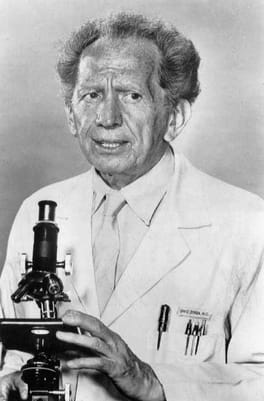
Photo: ABC Television / Public domain (source: Wikimedia Commons)
Sam Jaffe was born in New York City, New York, United States on March 10, 1891. Public records list Sam Jaffe as a stage actor, television actor and film actor. Death is recorded on March 24, 1984, at the age of 93. Education on record includes Townsend Harris High School and City College of New York. Listed accolades include Paul Robeson Award (1978) and Volpi Cup for Best Actor.
My Take
Sam Jaffe is a reminder that the most interesting people rarely fit one box. Born in New York City in 1891, he was an actor, but also a teacher, mathematician, musician and engineer, which I find delightful and a little intimidating. He won the Volpi Cup at Venice for The Asphalt Jungle in 1950 and earned an Oscar nomination the same year, yet his curiosity clearly ranged far past the soundstage. That breadth is what stays with me. He worked into a long life, dying in 1984 at 93, and embodied a kind of intellectual restlessness Hollywood doesn't really make anymore. A genuine renaissance figure who happened to act.
This take was written by generative AI, one per person, from publicly reported facts (editorial policy). It is a reading of the record, not reporting.
1. Profile
- Name (English)
- Sam Jaffe
- Name (Japanese)
- サム・ジャッフェ
- Reading
- さむ・じゃっふぇ
- Born
- March 10, 1891 – March 24, 1984
- Origin
- New York City, New York, United States
- Occupation
- actor / stage actor / television actor / film actor / teacher
- Zodiac / Chinese zodiac
- Pisces / Rabbit
2. Background
- High school
- Townsend Harris High School
- University
- City College of New York
Awards & achievements
- 1978 Paul Robeson Award
- Volpi Cup for Best Actor
3. Links
- Wikipedia (English)https://en.wikipedia.org/wiki/Sam%20Jaffe
- Wikipedia (Japanese)https://ja.wikipedia.org/wiki/%E3%82%B5%E3%83%A0%E3%83%BB%E3%82%B8%E3%83%A3%E3%83%83%E3%83%95%E3%82%A7
- Wikidatahttps://www.wikidata.org/wiki/Q719247
4. About this entry
Tags
- Last updated
Facts are limited to publicly available information up to 2024; non-public or unconfirmed items are omitted. English text is machine-assisted (facts translated by Sonnet, "My Take" written by Opus 4.8). The Japanese page is the source of record.
Frequently asked questions
When was Sam Jaffe born?
Born March 10, 1891.
When did Sam Jaffe die?
Died March 24, 1984, aged 93.
Where was Sam Jaffe from?
Sam Jaffe was from New York City, New York, United States.
What did Sam Jaffe do?
Sam Jaffe worked as actor, stage actor, television actor, film actor, teacher.
Actor — see all → · Stage actor — see all → · More people from the United States →