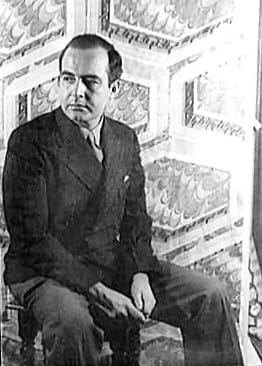
Photo: Carl Van Vechten / Public domain (source: Wikimedia Commons)
Samuel Barber was a composer, musicologist and pianist. Born on March 9, 1910, Samuel Barber was from West Chester, Pennsylvania, United States. Death is recorded on January 23, 1981, at the age of 70. Education on record includes West Chester Henderson High School. Recorded honors include Rome Prize (1934), Guggenheim Fellowship (1945, 1947, 1949), Pulitzer Prize for Music (1958, 1963) and 2 more.
My Take
Samuel Barber is one of those composers who could make you feel the full weight of human grief in about eight minutes flat, and the Adagio for Strings is the proof. Written in 1936, it became the go-to piece for national mourning — and it still shows up whenever the world needs to feel something deeply and collectively. What I find remarkable about Barber is that he never chased the modernist crowd; while his peers were deconstructing tonality, he kept writing lush, emotionally direct music and won two Pulitzer Prizes doing it. He studied at Curtis, trained as a baritone, and genuinely understood the voice in a way most composers don't. The opera Antony and Cleopatra had a rocky premiere at the new Met in 1966, but even that stumble shows his ambition. A quietly essential American voice, gone too soon in 1981.
This take was written by generative AI, one per person, from publicly reported facts (editorial policy). It is a reading of the record, not reporting.
1. Profile
- Name (English)
- Samuel Barber
- Name (Japanese)
- サミュエル・バーバー
- Reading
- さみゅえる・ばーばー
- Born
- March 9, 1910 – January 23, 1981
- Origin
- West Chester, Pennsylvania, United States
- Occupation
- composer / musicologist / pianist / conductor / musician
- Zodiac / Chinese zodiac
- Pisces / Dog
2. Background
- High school
- West Chester Henderson High School
Awards & achievements
- 1934 Rome Prize
- 1945 Guggenheim Fellowship
- 1947 Guggenheim Fellowship
- 1949 Guggenheim Fellowship
- 1958 Pulitzer Prize for Music
- 1961 Fellow of the American Academy of Arts and Sciences
- 1963 Pulitzer Prize for Music
- 1980 Edward MacDowell Medal
3. Works & records
Filmography / notable works
| Category | Title |
|---|---|
| Notable work | Cello Concerto |
| Notable work | Adagio for Strings |
| Notable work | Agnus Dei |
| Notable work | Violin Concerto |
| Notable work | Antony and Cleopatra |
| Notable work | Capricorn Concerto |
4. Links
5. About this entry
Tags
- Last updated
Only publicly available facts are listed; non-public or unconfirmed items are omitted. Base data was compiled from Wikidata from June 2026 onward; ages are recalculated daily and deaths are checked against Wikidata on an ongoing basis. English text is machine-assisted (facts translated by Sonnet, "My Take" written by Opus 4.8). The Japanese page is the source of record.
Frequently asked questions
When was Samuel Barber born?
Samuel Barber was born on March 9, 1910.
When did Samuel Barber die?
Samuel Barber died on January 23, 1981, aged 70.
Where was Samuel Barber from?
Samuel Barber was from West Chester, Pennsylvania, United States.
What did Samuel Barber do?
Samuel Barber worked as composer, musicologist, pianist, conductor, musician.
Which high school did Samuel Barber attend?
Samuel Barber attended West Chester Henderson High School.
What was Samuel Barber known for?
Samuel Barber's notable works include Cello Concerto, Adagio for Strings, Agnus Dei.
Composer — see all → · Musicologist — see all → · More people from the United States → · More people born on March 9 →