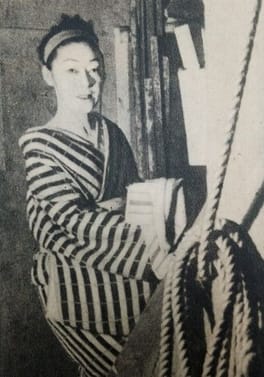
Photo: 朝日新聞社 / Public domain (source: Wikimedia Commons)
My Take
Born in 1904 — the same year the Wright brothers were making history — Sumiko Suzuki came into the world right as cinema itself was being invented, which means she lived through literally every era of the craft: silents, talkies, the war years, postwar reconstruction, and on into the television age before she passed in 1985 at 80. That kind of longevity across a medium's entire transformation is genuinely staggering to me. She was famous in her day as the "ghost-cat actress," the star of Japan's bakeneko horror films, and the atmosphere of whole decades of Japanese film is built on performers exactly like her. I just have a lot of respect for anyone who kept showing up through all of it.
This take was written by generative AI, one per person, from publicly reported facts (editorial policy). It is a reading of the record, not reporting.
Overview
Sumiko Suzuki (1904–1985) was a Japanese actor born in Tokyo on October 26, 1904. She was active during the Taisho and Showa eras, a period that spanned the silent film age through postwar Japanese cinema and stage. She passed away on January 18, 1985, at the age of 80. She became famous as the "ghost-cat actress" for her roles in bakeneko films.
1. Profile
- Name (English)
- Sumiko Suzuki
- Name (Japanese)
- 鈴木澄子
- Reading
- すずき すみこ
- Born
- October 26, 1904 – January 18, 1985
- Origin
- Tokyo, Japan
- Occupation
- Actor
- Zodiac / Chinese zodiac
- Scorpio / Dragon
2. Links
- Wikipedia (Japanese)https://ja.wikipedia.org/wiki/%E9%88%B4%E6%9C%A8%E6%BE%84%E5%AD%90
- Wikidatahttps://www.wikidata.org/wiki/Q11649053
3. About this entry
Tags
- Last updated
Only publicly available facts are listed; non-public or unconfirmed items are omitted. Base data was compiled from Wikidata from June 2026 onward; ages are recalculated daily and deaths are checked against Wikidata on an ongoing basis. English text is machine-assisted (facts translated by Sonnet, "My Take" written by Opus 4.8). The Japanese page is the source of record.
Frequently asked questions
When was Sumiko Suzuki born?
Sumiko Suzuki was born on October 26, 1904.
When did Sumiko Suzuki die?
Sumiko Suzuki died on January 18, 1985, aged 80.
Where was Sumiko Suzuki from?
Sumiko Suzuki was from Tokyo, Japan.
What did Sumiko Suzuki do?
Sumiko Suzuki worked as Actor.
Actor — see all → · More people from Japan → · More people born on October 26 →