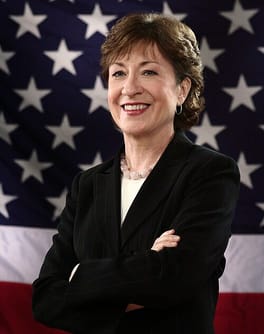
Photo: United States Senate / Public domain (source: Wikimedia Commons)
Born on December 7, 1952 in Maine, United States, Susan Collins is a politician, congressional staff and director. Susan Collins is 73 years old as of 2026. Education on record includes St. Lawrence University. Listed accolades include Maine Women's Hall of Fame (2011) and BBC 100 Women (2024).
My Take
I find Susan Collins genuinely interesting as a study in political endurance. Born in tiny Caribou, Maine, she has held a Senate seat since 1997 and become the longest-serving Republican woman in that chamber, which takes more than luck; it takes a deep read of her state. You can disagree with her votes and still respect that kind of staying power. Her 2024 BBC 100 Women nod signals an influence that crosses borders. I'm always more impressed by the politician who keeps earning the same voters' trust over decades than by the one chasing the next news cycle. Persistence is its own talent.
This take was written by generative AI, one per person, from publicly reported facts (editorial policy). It is a reading of the record, not reporting.
1. Profile
- Name (English)
- Susan Collins
- Name (Japanese)
- スーザン・コリンズ
- Reading
- すーざん・こりんず
- Born
- December 7, 1952 (age 73)
- Origin
- Maine, United States
- Occupation
- politician / congressional staff / director
- Zodiac / Chinese zodiac
- Sagittarius / Dragon
2. Background
- University
- St. Lawrence University
Awards & achievements
- 2011 Maine Women's Hall of Fame
- 2024 BBC 100 Women
3. Links
- Official sitehttps://www.collins.senate.gov
- Instagramhttps://www.instagram.com/sensusancollins/
- Xhttps://x.com/senatorcollins
- Wikipedia (English)https://en.wikipedia.org/wiki/Susan%20Collins
- Wikipedia (Japanese)https://ja.wikipedia.org/wiki/%E3%82%B9%E3%83%BC%E3%82%B6%E3%83%B3%E3%83%BB%E3%82%B3%E3%83%AA%E3%83%B3%E3%82%BA%20(%E6%94%BF%E6%B2%BB%E5%AE%B6)
- Wikidatahttps://www.wikidata.org/wiki/Q22279
4. About this entry
Tags
- Last updated
Facts are limited to publicly available information up to 2024; non-public or unconfirmed items are omitted. English text is machine-assisted (facts translated by Sonnet, "My Take" written by Opus 4.8). The Japanese page is the source of record.
Frequently asked questions
When was Susan Collins born?
Born December 7, 1952 (age 73).
Where is Susan Collins from?
Susan Collins is from Maine, United States.
What does Susan Collins do?
Susan Collins works as politician, congressional staff, director.
Politician — see all → · More people from the United States →