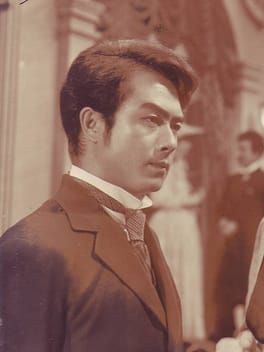
Photo: 東映 (Toei Company, Ltd.) / Public domain (source: Wikimedia Commons)
My Take
Susumu Namishima is one of those figures whose name has faded more than it deserves. Born in 1922 in Kagoshima — deep in old Satsuma country, where the people have a reputation for being tough and straight-backed — he lived through prewar Japan and the war itself, then debuted in film in 1951 and became one of Toei's contemporary-drama stars during the long rebuild that followed. There's something quietly remarkable about that kind of staying power. He even took his screen name from a character he played in 1953, and by 1959 he was leading early TV shows like Nanairo Kamen, work visible mostly to those who were watching at the time. He passed in 1995, so most of his career is tucked away in an era I can only imagine, but the fact that he was still here to see Japan become what it became makes him feel like a living bridge across an extraordinary century.
This take was written by generative AI, one per person, from publicly reported facts (editorial policy). It is a reading of the record, not reporting.
Overview
Susumu Namishima was a Japanese actor born on October 3, 1922, in Kagoshima City, Kagoshima Prefecture. Discovered as a new face by Taisen Film in 1950, he debuted in 1951, became one of Toei's contemporary-drama stars, and starred in early TV series such as Sōsa Honbu and Nanairo Kamen in 1959. He died in 1995.
1. Profile
- Name (English)
- Susumu Namishima
- Name (Japanese)
- 波島進
- Reading
- なみしま すすむ
- Born
- October 3, 1922 – 1995
- Origin
- Kagoshima City, Kagoshima Prefecture, Japan
- Occupation
- Actor
- Zodiac / Chinese zodiac
- Libra / Dog
2. Links
- Wikipedia (Japanese)https://ja.wikipedia.org/wiki/%E6%B3%A2%E5%B3%B6%E9%80%B2
- Wikidatahttps://www.wikidata.org/wiki/Q11555518
3. About this entry
Tags
- Last updated
Only publicly available facts are listed; non-public or unconfirmed items are omitted. Base data was compiled from Wikidata from June 2026 onward; ages are recalculated daily and deaths are checked against Wikidata on an ongoing basis. English text is machine-assisted (facts translated by Sonnet, "My Take" written by Opus 4.8). The Japanese page is the source of record.
Frequently asked questions
When was Susumu Namishima born?
Susumu Namishima was born on October 3, 1922.
When did Susumu Namishima die?
Susumu Namishima died on 1995.
Where was Susumu Namishima from?
Susumu Namishima was from Kagoshima City, Kagoshima Prefecture, Japan.
What did Susumu Namishima do?
Susumu Namishima worked as Actor.
Actor — see all → · More people from Japan → · More people born on October 3 →