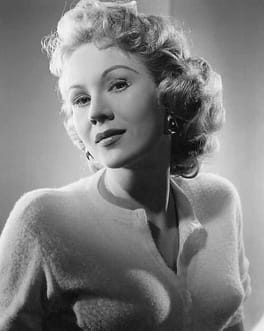
Photo: movie studio / Public domain (source: Wikimedia Commons)
Born on November 30, 1920, Virginia Mayo was from St. Louis, Missouri, United States. Virginia Mayo was a film actor, television actor and stage actor. Death is recorded on January 17, 2005, at the age of 84. Education on record includes Soldan International Studies High School. Awards on record include star on Hollywood Walk of Fame.
My Take
Virginia Mayo is pure Golden Age Hollywood to me. Born Virginia Jones in St. Louis in 1920, she became Warner Bros.' biggest box-office draw in the late 1940s, which is a staggering thing to say about anyone. I'm drawn to the range her credits show: light comedy alongside Danny Kaye, then the heavyweight drama of The Best Years of Our Lives, then the menace of White Heat. That noir pivot especially intrigues me, because it's rare for a star known for charm to lean convincingly into darkness. Her star on the Hollywood Walk of Fame feels well earned. She's the sort of name worth rediscovering today.
This take was written by generative AI, one per person, from publicly reported facts (editorial policy). It is a reading of the record, not reporting.
1. Profile
- Name (English)
- Virginia Mayo
- Name (Japanese)
- ヴァージニア・メイヨ
- Reading
- ゔぁーじにあ・めいよ
- Born
- November 30, 1920 – January 17, 2005
- Origin
- St. Louis, Missouri, United States
- Occupation
- film actor / television actor / stage actor / actor
- Zodiac / Chinese zodiac
- Sagittarius / Monkey
2. Background
- High school
- Soldan International Studies High School
Awards & achievements
- star on Hollywood Walk of Fame
3. Links
- Official sitehttp://www.virginiamayo.com
- Wikipedia (English)https://en.wikipedia.org/wiki/Virginia%20Mayo
- Wikipedia (Japanese)https://ja.wikipedia.org/wiki/%E3%83%B4%E3%82%A1%E3%83%BC%E3%82%B8%E3%83%8B%E3%82%A2%E3%83%BB%E3%83%A1%E3%82%A4%E3%83%A8
- Wikidatahttps://www.wikidata.org/wiki/Q232245
4. About this entry
Tags
- Last updated
Facts are limited to publicly available information up to 2024; non-public or unconfirmed items are omitted. English text is machine-assisted (facts translated by Sonnet, "My Take" written by Opus 4.8). The Japanese page is the source of record.
Frequently asked questions
When was Virginia Mayo born?
Born November 30, 1920.
When did Virginia Mayo die?
Died January 17, 2005, aged 84.
Where was Virginia Mayo from?
Virginia Mayo was from St. Louis, Missouri, United States.
What did Virginia Mayo do?
Virginia Mayo worked as film actor, television actor, stage actor, actor.
Film actor — see all → · Television actor — see all → · More people from the United States →