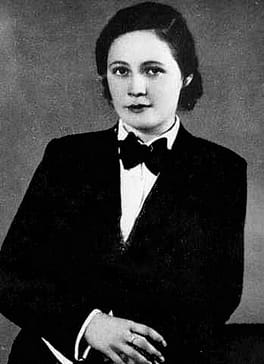
Photo: Unknown author / Public domain (source: Wikimedia Commons)
Vítězslava Kaprálová was credited as a conductor and composer. Vítězslava Kaprálová was born on January 24, 1915 in Brno, South Moravian Region, Czech Republic. Death is recorded on June 16, 1940, at the age of 25.
My Take
What strikes me most about Vítězslava Kaprálová is the brutal brevity of her life. A Czech composer and conductor born in Brno in 1915, she was gone by 1940 at just twenty-five. To pursue conducting as a woman in that era took fierce conviction, and the fact that her official archive is still lovingly maintained tells me her music never stopped resonating. I admire artists who burn intensely rather than long, and Kaprálová feels exactly like that kind of comet. I would urge anyone curious about overlooked twentieth-century voices to seek out her scores and listen carefully.
This take was written by generative AI, one per person, from publicly reported facts (editorial policy). It is a reading of the record, not reporting.
1. Profile
- Name (English)
- Vítězslava Kaprálová
- Name (Japanese)
- ヴィーチェスラヴァ・カプラーロヴァー
- Reading
- ゔぃーちぇすらゔぁ・かぷらーろゔぁー
- Born
- January 24, 1915 – June 16, 1940
- Origin
- Brno, South Moravian Region, Czech Republic
- Occupation
- conductor / composer
- Zodiac / Chinese zodiac
- Aquarius / Rabbit
2. Links
- Official sitehttp://www.kapralova.org/
- Wikipedia (English)https://en.wikipedia.org/wiki/V%C3%ADt%C4%9Bzslava%20Kapr%C3%A1lov%C3%A1
- Wikipedia (Japanese)https://ja.wikipedia.org/wiki/%E3%83%B4%E3%82%A3%E3%83%BC%E3%83%81%E3%82%A7%E3%82%B9%E3%83%A9%E3%83%B4%E3%82%A1%E3%83%BB%E3%82%AB%E3%83%97%E3%83%A9%E3%83%BC%E3%83%AD%E3%83%B4%E3%82%A1%E3%83%BC
- Wikidatahttps://www.wikidata.org/wiki/Q263208
3. About this entry
Tags
- Last updated
Facts are limited to publicly available information up to 2024; non-public or unconfirmed items are omitted. English text is machine-assisted (facts translated by Sonnet, "My Take" written by Opus 4.8). The Japanese page is the source of record.
Frequently asked questions
When was Vítězslava Kaprálová born?
Born January 24, 1915.
When did Vítězslava Kaprálová die?
Died June 16, 1940, aged 25.
Where was Vítězslava Kaprálová from?
Vítězslava Kaprálová was from Brno, South Moravian Region, Czech Republic.
What did Vítězslava Kaprálová do?
Vítězslava Kaprálová worked as conductor, composer.
Conductor — see all → · Composer — see all → · More people from the Czech Republic →