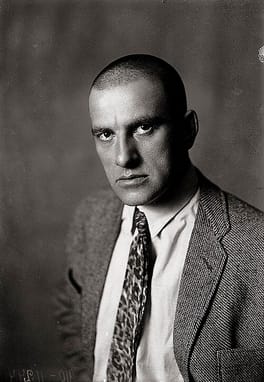
Photo: Unidentified photographer / Public domain (source: Wikimedia Commons)
Vladimir Mayakovsky was born on July 7, 1893 in Baghdati, Imereti, Georgia and was credited as a poster artist, poet and actor. Vladimir Mayakovsky died on April 14, 1930 at the age of 36. Listed accolades include Lenin Komsomol Prize and Medal "For Diligence" (1801).
My Take
Vladimir Mayakovsky fascinates me as an artist who lived at maximum volume. Born in Georgia, central to Russian Futurism, he wrote, acted, and designed posters with a ferocity that turned poetry into a public, almost physical event. I'm drawn to that total commitment, the way he hurled himself against his era rather than observing it from a safe distance. His death at thirty-six still feels like a tragedy, a flame that burned too hot to last. A century later his lines retain their charge, and I think that lasting heat is the truest measure of the man.
This take was written by generative AI, one per person, from publicly reported facts (editorial policy). It is a reading of the record, not reporting.
1. Profile
- Name (English)
- Vladimir Mayakovsky
- Name (Japanese)
- ウラジーミル・マヤコフスキー
- Reading
- うらじーみる・まやこふすきー
- Born
- July 7, 1893 – April 14, 1930
- Origin
- Baghdati, Imereti, Georgia
- Occupation
- poster artist / poet / actor / playwright / writer
- Zodiac / Chinese zodiac
- Cancer / Snake
2. Background
Awards & achievements
- Lenin Komsomol Prize
- Medal "For Diligence" (1801)
3. Links
- Official sitehttps://www.vmayakovsky.ru/
- Wikipedia (English)https://en.wikipedia.org/wiki/Vladimir%20Mayakovsky
- Wikipedia (Japanese)https://ja.wikipedia.org/wiki/%E3%82%A6%E3%83%A9%E3%82%B8%E3%83%BC%E3%83%9F%E3%83%AB%E3%83%BB%E3%83%9E%E3%83%A4%E3%82%B3%E3%83%95%E3%82%B9%E3%82%AD%E3%83%BC
- Wikidatahttps://www.wikidata.org/wiki/Q132964
4. About this entry
Tags
- Last updated
Facts are limited to publicly available information up to 2024; non-public or unconfirmed items are omitted. English text is machine-assisted (facts translated by Sonnet, "My Take" written by Opus 4.8). The Japanese page is the source of record.
Frequently asked questions
When was Vladimir Mayakovsky born?
Vladimir Mayakovsky was born on July 7, 1893.
When did Vladimir Mayakovsky die?
Vladimir Mayakovsky died on April 14, 1930, aged 36.
Where was Vladimir Mayakovsky from?
Vladimir Mayakovsky was from Baghdati, Imereti, Georgia.
What did Vladimir Mayakovsky do?
Vladimir Mayakovsky worked as poster artist, poet, actor, playwright, writer.
Poet — see all → · More people from Georgia → · More people born on July 7 →