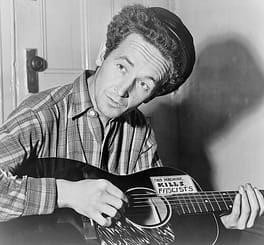
Photo: Al Aumuller, photographer. NYWT&S staff photograph. / Public domain (source: Wikimedia Commons)
Woody Guthrie, born on July 14, 1912 in Okemah, Oklahoma, United States, was a guitarist, singer-songwriter and street artist. Woody Guthrie died on October 3, 1967 at the age of 55. Recorded honors include Grammy Lifetime Achievement Award (2000), Americana Music Association President's Award (2016), Oklahoma Music Hall of Fame (1997) and 1 more. Notable works include This Land Is Your Land.
My Take
Woody Guthrie remains my measuring stick for what a songwriter can be. Born in Okemah, Oklahoma in 1912, he turned dust-bowl hardship into plainspoken anthems, and This Land Is Your Land still works as an alternative national hymn. What strikes me is how unguarded his convictions were; he famously wrote that his guitar was a machine for fighting fascists, and he meant it. Nearly every protest singer since, Dylan included, works in his shadow. The Rock and Roll Hall of Fame induction and the Grammy Lifetime Achievement Award feel almost beside the point. His real monument is the idea that a song belongs to the people who need it most.
This take was written by generative AI, one per person, from publicly reported facts (editorial policy). It is a reading of the record, not reporting.
1. Profile
- Name (English)
- Woody Guthrie
- Name (Japanese)
- ウディ・ガスリー
- Reading
- うでぃ・がすりー
- Born
- July 14, 1912 – October 3, 1967
- Origin
- Okemah, Oklahoma, United States
- Occupation
- guitarist / singer-songwriter / street artist / musicologist / songwriter
- Zodiac / Chinese zodiac
- Cancer / Rat
2. Background
Awards & achievements
- 2000 Grammy Lifetime Achievement Award
- 2016 Americana Music Association President's Award
- 1997 Oklahoma Music Hall of Fame
- 1988 Rock and Roll Hall of Fame
3. Works & records
Filmography / notable works
| Category | Title |
|---|---|
| Notable work | This Land Is Your Land |
4. Links
- Official sitehttps://www.woodyguthrie.org
- Instagramhttps://www.instagram.com/woodyguthrieofficial/
- Wikipedia (English)https://en.wikipedia.org/wiki/Woody%20Guthrie
- Wikipedia (Japanese)https://ja.wikipedia.org/wiki/%E3%82%A6%E3%83%87%E3%82%A3%E3%83%BB%E3%82%AC%E3%82%B9%E3%83%AA%E3%83%BC
- Wikidatahttps://www.wikidata.org/wiki/Q4061
5. About this entry
Tags
- Last updated
Facts are limited to publicly available information up to 2024; non-public or unconfirmed items are omitted. English text is machine-assisted (facts translated by Sonnet, "My Take" written by Opus 4.8). The Japanese page is the source of record.
Frequently asked questions
When was Woody Guthrie born?
Born July 14, 1912.
When did Woody Guthrie die?
Died October 3, 1967, aged 55.
Where was Woody Guthrie from?
Woody Guthrie was from Okemah, Oklahoma, United States.
What did Woody Guthrie do?
Woody Guthrie worked as guitarist, singer-songwriter, street artist, musicologist, songwriter.
What was Woody Guthrie known for?
Notable works include This Land Is Your Land.
Guitarist — see all → · Singer-songwriter — see all → · More people from the United States →