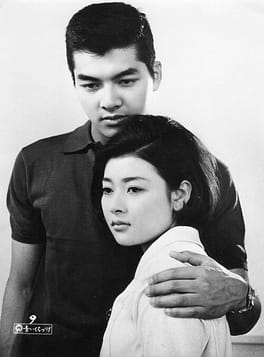
Photo: Daiei Motion Picture Company (大映株式会社) / Public domain (source: Wikimedia Commons)
My Take
Born in 1926, Yoshio Inoue belongs to a generation of Japanese filmmakers who figured out the language of cinema before anyone had a remote control, let alone a laptop. The fact that he worked as both director and screenwriter tells me something important — he wasn't the kind of guy who handed off a script and walked away. He wanted to control the whole vision, words and images at once, which in the Showa studio era took serious nerve. I don't have a filmography in front of me, and I won't fake one, but just knowing he was shaping stories on paper when Japanese cinema was in one of its most creatively combustible periods makes me want to dig.
This take was written by generative AI, one per person, from publicly reported facts (editorial policy). It is a reading of the record, not reporting.
Overview
Yoshio Inoue (born September 8, 1926) was a Japanese film director and screenwriter who was active during the Showa era of Japanese cinema. He worked across both directing and writing, contributing to the Japanese film industry during one of its most prolific periods. Detailed records of his individual works and career timeline are not widely documented in available sources.
1. Profile
- Name (English)
- Yoshio Inoue
- Name (Japanese)
- 井上芳夫
- Reading
- いのうえ よしお
- Born
- September 8, 1926 (age 100)
- Origin
- Japan
- Occupation
- Film Director / Screenwriter
- Zodiac / Chinese zodiac
- Virgo / Tiger
2. Links
- Wikipedia (Japanese)https://ja.wikipedia.org/wiki/%E4%BA%95%E4%B8%8A%E8%8A%B3%E5%A4%AB
- Wikidatahttps://www.wikidata.org/wiki/Q3572683
3. About this entry
Tags
- Last updated
Facts are limited to publicly available information up to 2024; non-public or unconfirmed items are omitted. English text is machine-assisted (facts translated by Sonnet, "My Take" written by Opus 4.8). The Japanese page is the source of record.
Frequently asked questions
When was Yoshio Inoue born?
Born September 8, 1926 (age 100).
Where is Yoshio Inoue from?
Yoshio Inoue is from Japan.
What does Yoshio Inoue do?
Yoshio Inoue works as Film Director, Screenwriter.
Film Director — see all → · Screenwriter — see all → · More people from Japan →