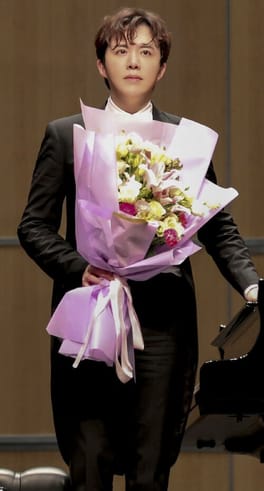
Photo: ING远航ING / Attribution (source: Wikimedia Commons)
Yundi was born on October 7, 1982 in Chongqing, People's Republic of China and is credited as a pianist. Yundi is 44 years old as of 2026. Education on record includes Hanover University of Music, Drama and Media. Awards on record include Silver Medal for Merit to Culture – Gloria Artis (2010), Golden Medal for Merit to Culture (2019), International Chopin Piano Competition (2000) and 1 more.
My Take
I've been a fan of Yundi ever since he became the first Chinese pianist to win the International Chopin Piano Competition back in 2000 — at just 18 years old. That alone would be a career-defining moment for most musicians, but what makes Yundi genuinely special is the way he plays Chopin: there's an intimacy and a natural singing quality to his phrasing that doesn't feel studied or forced. He's not the kind of pianist who bulldozes you with technique; he draws you in quietly. His Liszt and Prokofiev readings also have real edge. Trained in Hanover and shaped by a completely different musical tradition from most European competitors, he brought something fresh to the Western canon, and the classical world was better for it.
This take was written by generative AI, one per person, from publicly reported facts (editorial policy). It is a reading of the record, not reporting.
1. Profile
- Name (English)
- Yundi
- Name (Japanese)
- ユンディ・リ
- Reading
- ゆんでぃ・り
- Born
- October 7, 1982 (age 44)
- Origin
- Chongqing, People's Republic of China
- Occupation
- pianist
- Zodiac / Chinese zodiac
- Libra / Dog
2. Background
- University
- Hanover University of Music, Drama and Media
Awards & achievements
- 2010 Silver Medal for Merit to Culture – Gloria Artis
- 2019 Golden Medal for Merit to Culture
- 2000 International Chopin Piano Competition
- 1999 Gina Bachauer International Piano Competition
3. Links
- Instagramhttps://www.instagram.com/yundimusicofficial/
- Xhttps://x.com/YundiMusic
- Wikipedia (English)https://en.wikipedia.org/wiki/Yundi
- Wikipedia (Japanese)https://ja.wikipedia.org/wiki/%E3%83%A6%E3%83%B3%E3%83%87%E3%82%A3%E3%83%BB%E3%83%AA
- Wikidatahttps://www.wikidata.org/wiki/Q557244
4. About this entry
Tags
- Last updated
Only publicly available facts are listed; non-public or unconfirmed items are omitted. Base data was compiled from Wikidata from June 2026 onward; ages are recalculated daily and deaths are checked against Wikidata on an ongoing basis. English text is machine-assisted (facts translated by Sonnet, "My Take" written by Opus 4.8). The Japanese page is the source of record.
Frequently asked questions
When was Yundi born?
Yundi was born on October 7, 1982 and is 44 years old.
Where is Yundi from?
Yundi is from Chongqing, People's Republic of China.
What does Yundi do?
Yundi works as pianist.
Where did Yundi study?
Yundi attended Hanover University of Music, Drama and Media.
Pianist — see all → · More people from the People's Republic of China → · More people born on October 7 →