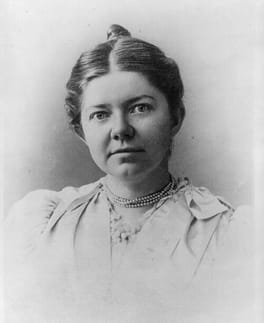
Photo: George Grantham Bain Collection / Public domain (source: Wikimedia Commons)
My Take
Amy Beach is one of those figures who should be a household name and isn't, which always frustrates me. The Gaelic Symphony alone earns her a permanent place in American music history, yet she pulled it off as a largely self-taught composer in an era that gave women almost no room to be taken seriously in large-scale forms. What I find most compelling is how she balanced a celebrated performing career, briefly suppressed during her marriage, then revived with real force after she was widowed. Her songs and chamber works reward repeated listening, full of lush late-Romantic harmony. She is overdue for a proper revival.
This take was written by generative AI, one per person, from publicly reported facts (editorial policy). It is a reading of the record, not reporting.
Overview
Amy Beach (1867-1944) was an American composer and pianist, widely regarded as the first successful American woman composer of large-scale art music. Largely self-taught in composition, she gained international recognition for her Gaelic Symphony, premiered by the Boston Symphony Orchestra in 1896, the first symphony written and published by an American woman. Her output spans more than 300 works including songs, chamber music, choral pieces, and her Piano Concerto. After her husband's death she resumed concert touring in Europe and the United States.
1. Profile
- Name (English)
- Amy Beach
- Name (Japanese)
- エイミー・ビーチ
- Reading
- えいみー・びーち
- Born
- September 5, 1867 – December 27, 1944
- Origin
- Henniker, New Hampshire, United States
- Occupation
- Pianist / Composer
- Zodiac / Chinese zodiac
- Virgo / Rabbit
2. Links
- Wikipedia (English)https://en.wikipedia.org/wiki/Amy%20Beach
- Wikipedia (Japanese)https://ja.wikipedia.org/wiki/%E3%82%A8%E3%82%A4%E3%83%9F%E3%83%BC%E3%83%BB%E3%83%93%E3%83%BC%E3%83%81
- Wikidatahttps://www.wikidata.org/wiki/Q235699
3. About this entry
Tags
- Last updated
Facts are limited to publicly available information up to 2024; non-public or unconfirmed items are omitted. English text is machine-assisted (facts translated by Sonnet, "My Take" written by Opus 4.8). The Japanese page is the source of record.
Frequently asked questions
When was Amy Beach born?
Born September 5, 1867.
When did Amy Beach die?
Died December 27, 1944, aged 77.
Where was Amy Beach from?
Amy Beach was from Henniker, New Hampshire, United States.
What did Amy Beach do?
Amy Beach worked as Pianist, Composer.
Pianist — see all → · Composer — see all → · More people from the United States →