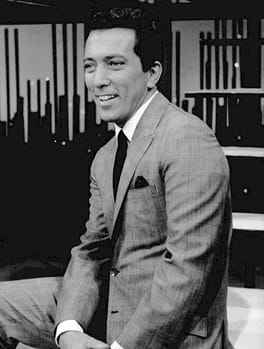
Photo: NBC Television / Public domain (source: Wikimedia Commons)
Andy Williams was born on December 3, 1927 in Wall Lake, Iowa, United States. Public records list Andy Williams as a singer, art collector and actor. Death is recorded on September 25, 2012, at the age of 84. Schooling on record includes Western Hills High School. Awards on record include Ellis Island Medal of Honor and star on Hollywood Walk of Fame.
My Take
I'll admit it: Andy Williams is my comfort-blanket of a crooner, the voice that makes a snowy night feel like a warm living room. "Moon River" is the obvious one, and yes, he owned it, but what I love most is how effortless he made everything sound, like he was just humming to you across the kitchen table. That velvety, unhurried baritone never showed off, it just settled you down. And honestly, Christmas isn't Christmas without "It's the Most Wonderful Time of the Year" cutting through the noise. Watching old clips of The Andy Williams Show, he had this easy, grinning charm that's basically extinct now. He passed in 2012, but pop that voice on and the whole room exhales. A genuine classic, no asterisks.
This take was written by generative AI, one per person, from publicly reported facts (editorial policy). It is a reading of the record, not reporting.
1. Profile
- Name (English)
- Andy Williams
- Name (Japanese)
- アンディ・ウィリアムズ
- Reading
- あんでぃ・うぃりあむず
- Born
- December 3, 1927 – September 25, 2012
- Origin
- Wall Lake, Iowa, United States
- Occupation
- singer / art collector / actor / manufacturer / television presenter
- Zodiac / Chinese zodiac
- Sagittarius / Rabbit
2. Background
- High school
- Western Hills High School
Awards & achievements
- Ellis Island Medal of Honor
- star on Hollywood Walk of Fame
3. Links
- Official sitehttps://www.andywilliamspac.com
- Wikipedia (English)https://en.wikipedia.org/wiki/Andy%20Williams
- Wikipedia (Japanese)https://ja.wikipedia.org/wiki/%E3%82%A2%E3%83%B3%E3%83%87%E3%82%A3%E3%83%BB%E3%82%A6%E3%82%A3%E3%83%AA%E3%82%A2%E3%83%A0%E3%82%B9
- Wikidatahttps://www.wikidata.org/wiki/Q214548
4. About this entry
Tags
- Last updated
Only publicly available facts are listed; non-public or unconfirmed items are omitted. Base data was compiled from Wikidata from June 2026 onward; ages are recalculated daily and deaths are checked against Wikidata on an ongoing basis. English text is machine-assisted (facts translated by Sonnet, "My Take" written by Opus 4.8). The Japanese page is the source of record.
Frequently asked questions
When was Andy Williams born?
Andy Williams was born on December 3, 1927.
When did Andy Williams die?
Andy Williams died on September 25, 2012, aged 84.
Where was Andy Williams from?
Andy Williams was from Wall Lake, Iowa, United States.
What did Andy Williams do?
Andy Williams worked as singer, art collector, actor, manufacturer, television presenter.
Which high school did Andy Williams attend?
Andy Williams attended Western Hills High School.
Singer — see all → · Art collector — see all → · More people from the United States → · More people born on December 3 →