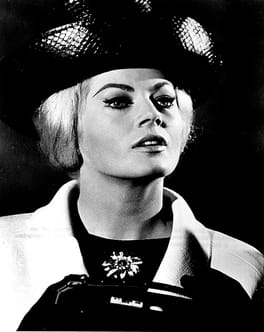
Photo: MGm / Public domain (source: Wikimedia Commons)
Born on September 29, 1931 in Malmö, Skåne County, Sweden, Anita Ekberg was a fashion model, film actor and beauty pageant contestant. Anita Ekberg died on January 11, 2015, aged 83. Listed accolades include Golden Globe Award for New Star of the Year – Actress (1956).
My Take
Anita Ekberg is one of those rare figures who became immortal through a single image — stepping into Rome's Trevi Fountain in La Dolce Vita, white gown soaking, arms outstretched, calling out to Marcello Mastroianni with pure magnetic force. Fellini couldn't have dreamed up a better muse: this Swedish bombshell from Malmö somehow embodied la dolce vita better than any Italian could. She won a Golden Globe for New Star of the Year back in 1956 and kept working across American and European productions for decades, but honestly, that one fountain scene is the whole legacy — and what a legacy it is. She passed away in January 2015, but that image is genuinely timeless. Cinema doesn't get more iconic than that.
This take was written by generative AI, one per person, from publicly reported facts (editorial policy). It is a reading of the record, not reporting.
1. Profile
- Name (English)
- Anita Ekberg
- Name (Japanese)
- アニタ・エクバーグ
- Reading
- あにた・えくばーぐ
- Born
- September 29, 1931 – January 11, 2015
- Origin
- Malmö, Skåne County, Sweden
- Occupation
- fashion model / film actor / beauty pageant contestant / model / actor
- Zodiac / Chinese zodiac
- Libra / Goat
2. Background
Awards & achievements
- 1956 Golden Globe Award for New Star of the Year – Actress
3. Links
4. About this entry
Tags
- Last updated
Only publicly available facts are listed; non-public or unconfirmed items are omitted. Base data was compiled from Wikidata from June 2026 onward; ages are recalculated daily and deaths are checked against Wikidata on an ongoing basis. English text is machine-assisted (facts translated by Sonnet, "My Take" written by Opus 4.8). The Japanese page is the source of record.
Frequently asked questions
When was Anita Ekberg born?
Anita Ekberg was born on September 29, 1931.
When did Anita Ekberg die?
Anita Ekberg died on January 11, 2015, aged 83.
Where was Anita Ekberg from?
Anita Ekberg was from Malmö, Skåne County, Sweden.
What did Anita Ekberg do?
Anita Ekberg worked as fashion model, film actor, beauty pageant contestant, model, actor.
Fashion model — see all → · Film actor — see all → · More people from Sweden → · More people born on September 29 →