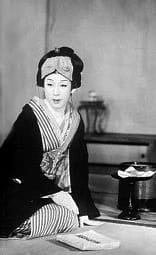
Photo: 大映株式会社 / Daiei Motion Picture Company / Public domain (source: Wikimedia Commons)
My Take
Arashi Hinasuke X is one of those figures where the sheer weight of the name does most of the talking. Born in 1913 in Tokyo, he carried the tenth iteration of a storied kabuki lineage through some of the most turbulent decades Japan ever saw — war, occupation, postwar reinvention — and he kept stepping onto the stage anyway. That's not a small thing. The "Arashi Hinasuke" name stretches back generations, and inheriting it means inheriting a kind of responsibility that would flatten most people before they even got their costume on. Kabuki in the Showa era was a world of iron discipline and inherited form, and his path is on record: a debut at the Ichimura-za in 1920, a move to Kansai kabuki in 1941 and the name-taking in 1943 — he was the craft, not the celebrity. Died in 1986 at 72, a working piece of living history. I find that quietly remarkable.
This take was written by generative AI, one per person, from publicly reported facts (editorial policy). It is a reading of the record, not reporting.
Overview
Arashi Hinasuke X (1913–1986) was a Japanese kabuki actor born in Tokyo on October 4, 1913. He carried the distinguished hereditary stage name Arashi Hinasuke as its tenth holder, a lineage with deep roots in the classical kabuki tradition. He died on January 29, 1986, at the age of 72.
1. Profile
- Name (English)
- Arashi Hinasuke X
- Name (Japanese)
- 十代目 嵐雛助
- Reading
- あらし ひなすけ
- Born
- October 4, 1913 – January 29, 1986
- Origin
- Tokyo, Japan
- Occupation
- Kabuki actor
- Zodiac / Chinese zodiac
- Libra / Ox
2. Links
3. About this entry
Tags
- Last updated
Only publicly available facts are listed; non-public or unconfirmed items are omitted. Base data was compiled from Wikidata from June 2026 onward; ages are recalculated daily and deaths are checked against Wikidata on an ongoing basis. English text is machine-assisted (facts translated by Sonnet, "My Take" written by Opus 4.8). The Japanese page is the source of record.
Frequently asked questions
When was Arashi Hinasuke X born?
Arashi Hinasuke X was born on October 4, 1913.
When did Arashi Hinasuke X die?
Arashi Hinasuke X died on January 29, 1986, aged 72.
Where was Arashi Hinasuke X from?
Arashi Hinasuke X was from Tokyo, Japan.
What did Arashi Hinasuke X do?
Arashi Hinasuke X worked as Kabuki actor.
Kabuki actor — see all → · More people from Japan → · More people born on October 4 →