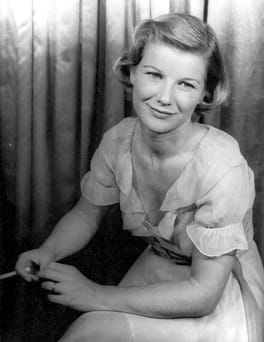
Photo: Unknown author / Public domain (source: Wikimedia Commons)
Barbara Bel Geddes was credited as a television actor, film actor and stage actor. Born on October 31, 1922, Barbara Bel Geddes was from New York City, New York, United States. Death is recorded on August 8, 2005, at the age of 82. Awards on record include Theatre World Award (1946), Primetime Emmy Award for Outstanding Lead Actress in a Drama Series (1980), Donaldson Awards and 1 more.
My Take
What strikes me about Barbara Bel Geddes is her sheer range over nearly fifty years: stage, film, television, and children's books all at once. The 1980 Emmy is the headline, but I'm more taken with how she quietly mastered several crafts without chasing fame. A New Yorker who painted, wrote, and acted with equal seriousness, she embodies a kind of dignified versatility that's gone out of fashion. Performers who build steady, substantive bodies of work tend to age better than the flashy ones, and Bel Geddes is exactly that sort of artist. I find her career genuinely admirable.
This take was written by generative AI, one per person, from publicly reported facts (editorial policy). It is a reading of the record, not reporting.
1. Profile
- Name (English)
- Barbara Bel Geddes
- Name (Japanese)
- バーバラ・ベル・ゲデス
- Reading
- ばーばら・べる・げです
- Born
- October 31, 1922 – August 8, 2005
- Origin
- New York City, New York, United States
- Occupation
- television actor / film actor / writer / stage actor / children's writer
- Zodiac / Chinese zodiac
- Scorpio / Dog
2. Background
Awards & achievements
- 1946 Theatre World Award
- 1980 Primetime Emmy Award for Outstanding Lead Actress in a Drama Series
- Donaldson Awards
- 1952 Hasty Pudding Woman of the Year
3. Links
- Official sitehttp://www.barbarabelgeddes.com/
- Wikipedia (English)https://en.wikipedia.org/wiki/Barbara%20Bel%20Geddes
- Wikipedia (Japanese)https://ja.wikipedia.org/wiki/%E3%83%90%E3%83%BC%E3%83%90%E3%83%A9%E3%83%BB%E3%83%99%E3%83%AB%E3%83%BB%E3%82%B2%E3%83%87%E3%82%B9
- Wikidatahttps://www.wikidata.org/wiki/Q232421
4. About this entry
Tags
- Last updated
Facts are limited to publicly available information up to 2024; non-public or unconfirmed items are omitted. English text is machine-assisted (facts translated by Sonnet, "My Take" written by Opus 4.8). The Japanese page is the source of record.
Frequently asked questions
When was Barbara Bel Geddes born?
Barbara Bel Geddes was born on October 31, 1922.
When did Barbara Bel Geddes die?
Barbara Bel Geddes died on August 8, 2005, aged 82.
Where was Barbara Bel Geddes from?
Barbara Bel Geddes was from New York City, New York, United States.
What did Barbara Bel Geddes do?
Barbara Bel Geddes worked as television actor, film actor, writer, stage actor, children's writer.
Television actor — see all → · Film actor — see all → · More people from the United States → · More people born on October 31 →