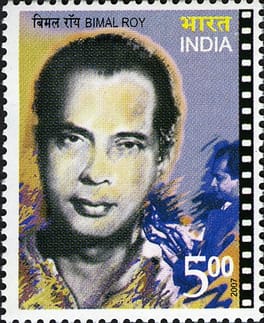
Photo: India Post, Government of India / GODL-India (source: Wikimedia Commons)
Bimal Roy, born on July 12, 1909 in Dhaka, Bangladesh, was a film director, cinematographer and film producer. Death is recorded on January 8, 1966, at the age of 56. Education on record includes University of Calcutta. Awards on record include Filmfare Award for Best Director (1954, 1955, 1956, 1959, 1960, 1961, 1964).
My Take
To me, Bimal Roy is the conscience of mid-century Hindi cinema. While the industry chased spectacle, he pointed his camera at landless farmers and the socially marginalized, drawing courage from Italian neo-realism after seeing Bicycle Thieves. Seven Filmfare Best Director awards are impressive, but what moves me more is his refusal to look away from poverty and injustice. A trained cinematographer and editor, he gave his films a truthfulness you can feel in every frame. Losing him at 57 was a real blow, yet the humane, socially aware tradition he established still feels alive in Indian filmmaking today.
This take was written by generative AI, one per person, from publicly reported facts (editorial policy). It is a reading of the record, not reporting.
1. Profile
- Name (English)
- Bimal Roy
- Name (Japanese)
- ビマル・ロイ
- Reading
- びまる・ろい
- Born
- July 12, 1909 – January 8, 1966
- Origin
- Dhaka, Bangladesh
- Occupation
- film director / cinematographer / film producer / screenwriter / film editor
- Zodiac / Chinese zodiac
- Cancer / Rooster
2. Background
- University
- University of Calcutta
Awards & achievements
- 1954 Filmfare Award for Best Director
- 1955 Filmfare Award for Best Director
- 1956 Filmfare Award for Best Director
- 1959 Filmfare Award for Best Director
- 1960 Filmfare Award for Best Director
- 1961 Filmfare Award for Best Director
- 1964 Filmfare Award for Best Director
3. Links
- Official sitehttps://bimalroymemorial.org/default/
- Wikipedia (English)https://en.wikipedia.org/wiki/Bimal%20Roy
- Wikipedia (Japanese)https://ja.wikipedia.org/wiki/%E3%83%93%E3%83%9E%E3%83%AB%E3%83%BB%E3%83%AD%E3%82%A4
- Wikidatahttps://www.wikidata.org/wiki/Q55405
4. About this entry
Tags
- Last updated
Facts are limited to publicly available information up to 2024; non-public or unconfirmed items are omitted. English text is machine-assisted (facts translated by Sonnet, "My Take" written by Opus 4.8). The Japanese page is the source of record.
Frequently asked questions
When was Bimal Roy born?
Born July 12, 1909.
When did Bimal Roy die?
Died January 8, 1966, aged 56.
Where was Bimal Roy from?
Bimal Roy was from Dhaka, Bangladesh.
What did Bimal Roy do?
Bimal Roy worked as film director, cinematographer, film producer, screenwriter, film editor.
Film director — see all → · Cinematographer — see all → · More people from Bangladesh →