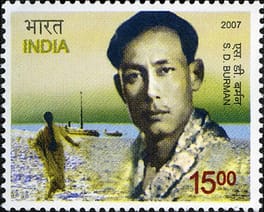
Photo: India Post, Government of India / GODL-India (source: Wikimedia Commons)
Born on October 1, 1906 in Cumilla, Cumilla District, Bangladesh, Sachin Dev Burman was a singer, music director and film score composer. Death is recorded on October 31, 1975, at the age of 69. Sachin Dev Burman was educated at University of Calcutta. Awards on record include Sangeet Natak Akademi Award, Filmfare Awards, National Film Award for Best Music Direction and 1 more.
My Take
What strikes me about Sachin Dev Burman is how he bridged two worlds that rarely meet: the refinement of a Tripura royal lineage and the raw soil of Bengali folk song. Scoring more than a hundred films, he didn't just write hits; he taught Hindi cinema how to feel rooted while sounding modern. I admire artists who refuse the false choice between high art and popular appeal, and Burman walked that line for decades. His influence on later composers is, to my ear, impossible to overstate. He remains one of cinema's quietest giants.
This take was written by generative AI, one per person, from publicly reported facts (editorial policy). It is a reading of the record, not reporting.
1. Profile
- Name (English)
- Sachin Dev Burman
- Name (Japanese)
- S・D・バーマン
- Reading
- S・D・ばーまん
- Born
- October 1, 1906 – October 31, 1975
- Origin
- Cumilla, Cumilla District, Bangladesh
- Occupation
- composer / singer / music director / film score composer / writer
- Zodiac / Chinese zodiac
- Libra / Horse
2. Background
- University
- University of Calcutta
Awards & achievements
- Sangeet Natak Akademi Award
- Filmfare Awards
- National Film Award for Best Music Direction
- Padma Shri in arts
3. Links
- Wikipedia (English)https://en.wikipedia.org/wiki/S.%20D.%20Burman
- Wikidatahttps://www.wikidata.org/wiki/Q2723913
4. About this entry
Tags
- Last updated
Facts are limited to publicly available information up to 2024; non-public or unconfirmed items are omitted. English text is machine-assisted (facts translated by Sonnet, "My Take" written by Opus 4.8). The Japanese page is the source of record.
Frequently asked questions
When was Sachin Dev Burman born?
Sachin Dev Burman was born on October 1, 1906.
When did Sachin Dev Burman die?
Sachin Dev Burman died on October 31, 1975, aged 69.
Where was Sachin Dev Burman from?
Sachin Dev Burman was from Cumilla, Cumilla District, Bangladesh.
What did Sachin Dev Burman do?
Sachin Dev Burman worked as composer, singer, music director, film score composer, writer.
Where did Sachin Dev Burman study?
Sachin Dev Burman attended University of Calcutta.
Composer — see all → · Singer — see all → · More people from Bangladesh → · More people born on October 1 →