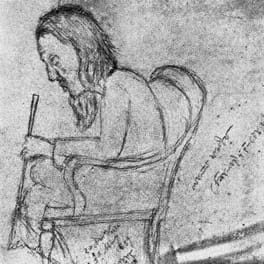
Photo: Jyotirindranath Tagore / Public domain (source: Wikimedia Commons)
Public records list Lalon as a poet, lyricist and composer. Lalon died on October 17, 1890.
My Take
Lalon fascinates me as one of those rare figures whose influence dwarfs his documented biography. A mystic poet who shaped Tagore, Nazrul Islam and even reached Allen Ginsberg is not merely a folk artist but a cultural wellspring. What moves me most is his refusal of caste and religious boundaries, singing instead about shared humanity. Over two centuries on, that message feels urgently contemporary. I think the real measure of an artist is whether their ideas outlive them, and Lalon clearly passed that test. Shining a light on such buried giants feels like genuinely worthwhile work.
This take was written by generative AI, one per person, from publicly reported facts (editorial policy). It is a reading of the record, not reporting.
1. Profile
- Name (English)
- Lalon
- Name (Japanese)
- フォキル・ラロン・シャハ
- Reading
- ふぉきる・らろん・しゃは
- Born
- 1772 – October 17, 1890
- Origin
- Jhenaidah District, Bangladesh
- Occupation
- poet / lyricist / composer / writer
- Zodiac / Chinese zodiac
- Dragon
2. Links
3. About this entry
Tags
- Last updated
Facts are limited to publicly available information up to 2024; non-public or unconfirmed items are omitted. English text is machine-assisted (facts translated by Sonnet, "My Take" written by Opus 4.8). The Japanese page is the source of record.
Frequently asked questions
Where was Lalon from?
Lalon was from Jhenaidah District, Bangladesh.
What did Lalon do?
Lalon worked as poet, lyricist, composer, writer.
Poet — see all → · Lyricist — see all → · More people from Bangladesh →