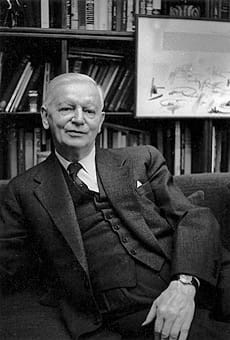
Photo: Erling Mandelmann / CC BY-SA 3.0 (source: Wikimedia Commons)
Carl Theodor Dreyer was born on February 3, 1889 in Copenhagen, Denmark. Public records list Carl Theodor Dreyer as a film director, screenwriter and film editor. Death is recorded on March 20, 1968, at the age of 79. Listed accolades include Golden Lion (1955).
My Take
Carl Theodor Dreyer is, for me, one of cinema's true high priests. The Passion of Joan of Arc is still one of the most overwhelming films I have ever sat through, those enormous close-ups of Falconetti's face hollow you out. Dreyer worked slowly and rarely, and you feel that austerity in every frame: the spiritual weight of Ordet, the dread of Vampyr, the stillness of Gertrud. He won the Golden Lion at Venice in 1955 for Ordet, but awards almost feel beside the point. This is a Danish master who treated film as something close to prayer, and it shows.
This take was written by generative AI, one per person, from publicly reported facts (editorial policy). It is a reading of the record, not reporting.
1. Profile
- Name (English)
- Carl Theodor Dreyer
- Name (Japanese)
- カール・テオドア・ドライヤー
- Reading
- かーる・ておどあ・どらいやー
- Born
- February 3, 1889 – March 20, 1968
- Origin
- Copenhagen, Denmark
- Occupation
- film director / screenwriter / film editor / director / filmmaker
- Zodiac / Chinese zodiac
- Aquarius / Ox
2. Background
Awards & achievements
- 1955 Golden Lion
3. Links
- Official sitehttps://www.carlthdreyer.dk
- Wikipedia (English)https://en.wikipedia.org/wiki/Carl%20Theodor%20Dreyer
- Wikipedia (Japanese)https://ja.wikipedia.org/wiki/%E3%82%AB%E3%83%BC%E3%83%AB%E3%83%BB%E3%83%86%E3%82%AA%E3%83%89%E3%82%A2%E3%83%BB%E3%83%89%E3%83%A9%E3%82%A4%E3%83%A4%E3%83%BC
- Wikidatahttps://www.wikidata.org/wiki/Q51127
4. About this entry
Tags
- Last updated
Facts are limited to publicly available information up to 2024; non-public or unconfirmed items are omitted. English text is machine-assisted (facts translated by Sonnet, "My Take" written by Opus 4.8). The Japanese page is the source of record.
Frequently asked questions
When was Carl Theodor Dreyer born?
Born February 3, 1889.
When did Carl Theodor Dreyer die?
Died March 20, 1968, aged 79.
Where was Carl Theodor Dreyer from?
Carl Theodor Dreyer was from Copenhagen, Denmark.
What did Carl Theodor Dreyer do?
Carl Theodor Dreyer worked as film director, screenwriter, film editor, director, filmmaker.
Film director — see all → · Screenwriter — see all → · More people from Denmark →