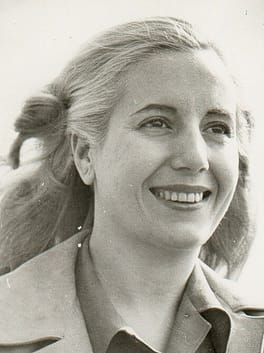
Photo: Pinélides Aristóbulo Fusco / Public domain (source: Wikimedia Commons)
Eva Perón was born on May 7, 1919 in Junín, Buenos Aires Province, Argentina. Eva Perón was a politician, stage actor and film actor. Death is recorded on July 26, 1952, at the age of 33. Awards on record include Grand Cross of the Order of Isabella the Catholic, Grand Cross of the Order of the Condor of the Andes, National Order of Merit and 5 more.
My Take
Eva Perón compresses more contradiction into thirty-three years than most public figures manage in eighty. An actress from provincial poverty who became the most powerful woman in the Americas, she understood—long before televised politics—that spectacle and sincerity could be the same weapon. I do not romanticize her uncritically; Peronism's legacy remains genuinely contested, and she was no saint. But her push for women's suffrage and her bond with Argentina's working class were real, not mere theater. What stays with me is the nickname: governments draped her in grand crosses, yet the people simply called her Evita. That gap between official honor and earned affection is her true biography.
This take was written by generative AI, one per person, from publicly reported facts (editorial policy). It is a reading of the record, not reporting.
1. Profile
- Name (English)
- Eva Perón
- Name (Japanese)
- エバ・ペロン
- Reading
- えば・ぺろん
- Born
- May 7, 1919 – July 26, 1952
- Origin
- Junín, Buenos Aires Province, Argentina
- Occupation
- politician / stage actor / film actor / trade unionist / women's rights activist
- Zodiac / Chinese zodiac
- Taurus / Goat
2. Background
Awards & achievements
- Grand Cross of the Order of Isabella the Catholic
- Grand Cross of the Order of the Condor of the Andes
- National Order of Merit
- Order of the Umayyads
- Grand Cross of the National Order of Honor and Merit
- Order of Boyacá
- Order of the Liberator General San Martín
- Order of Isabella the Catholic
3. Links
- Wikipedia (English)https://en.wikipedia.org/wiki/Eva%20Per%C3%B3n
- Wikipedia (Japanese)https://ja.wikipedia.org/wiki/%E3%82%A8%E3%83%90%E3%83%BB%E3%83%9A%E3%83%AD%E3%83%B3
- Wikidatahttps://www.wikidata.org/wiki/Q40933
4. About this entry
Tags
- Last updated
Facts are limited to publicly available information up to 2024; non-public or unconfirmed items are omitted. English text is machine-assisted (facts translated by Sonnet, "My Take" written by Opus 4.8). The Japanese page is the source of record.
Frequently asked questions
When was Eva Perón born?
Born May 7, 1919.
When did Eva Perón die?
Died July 26, 1952, aged 33.
Where was Eva Perón from?
Eva Perón was from Junín, Buenos Aires Province, Argentina.
What did Eva Perón do?
Eva Perón worked as politician, stage actor, film actor, trade unionist, women's rights activist.
Politician — see all → · Stage actor — see all → · More people from Argentina →