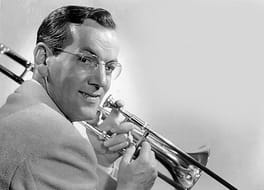
Photo: Unknown author / Public domain (source: Wikimedia Commons)
Glenn Miller was credited as a jazz musician, bandleader and composer. Glenn Miller was born on March 1, 1904 in Clarinda, Iowa, United States. Death is recorded on December 15, 1944, at the age of 40. Schooling on record includes University of Colorado Boulder. Listed accolades include Bronze Star Medal (1945), Grammy Lifetime Achievement Award (2003) and star on Hollywood Walk of Fame.
My Take
I have a soft spot for Glenn Miller's sound. That sweet, gliding big-band tone is instantly recognizable, and a track like Moonlight Serenade conjures an entire era in a few bars. Born in tiny Clarinda, Iowa, he became one of the defining voices of the swing age before leading a military band and vanishing over the Channel in 1944, a disappearance that reads like the ending of a film. The Grammy Lifetime Achievement Award is only fitting. To me he remains an undimmed sorcerer of twentieth-century music.
This take was written by generative AI, one per person, from publicly reported facts (editorial policy). It is a reading of the record, not reporting.
1. Profile
- Name (English)
- Glenn Miller
- Name (Japanese)
- グレン・ミラー
- Reading
- ぐれん・みらー
- Born
- March 1, 1904 – December 15, 1944
- Origin
- Clarinda, Iowa, United States
- Occupation
- jazz musician / bandleader / composer / music arranger / conductor
- Zodiac / Chinese zodiac
- Pisces / Dragon
2. Background
- University
- University of Colorado Boulder
Awards & achievements
- 1945 Bronze Star Medal
- 2003 Grammy Lifetime Achievement Award
- star on Hollywood Walk of Fame
3. Links
- Official sitehttps://www.glennmiller.org
- Wikipedia (English)https://en.wikipedia.org/wiki/Glenn%20Miller
- Wikipedia (Japanese)https://ja.wikipedia.org/wiki/%E3%82%B0%E3%83%AC%E3%83%B3%E3%83%BB%E3%83%9F%E3%83%A9%E3%83%BC
- Wikidatahttps://www.wikidata.org/wiki/Q103651
4. About this entry
Tags
- Last updated
Facts are limited to publicly available information up to 2024; non-public or unconfirmed items are omitted. English text is machine-assisted (facts translated by Sonnet, "My Take" written by Opus 4.8). The Japanese page is the source of record.
Frequently asked questions
When was Glenn Miller born?
Glenn Miller was born on March 1, 1904.
When did Glenn Miller die?
Glenn Miller died on December 15, 1944, aged 40.
Where was Glenn Miller from?
Glenn Miller was from Clarinda, Iowa, United States.
What did Glenn Miller do?
Glenn Miller worked as jazz musician, bandleader, composer, music arranger, conductor.
Where did Glenn Miller study?
Glenn Miller attended University of Colorado Boulder.
Jazz musician — see all → · Bandleader — see all → · More people from the United States → · More people born on March 1 →