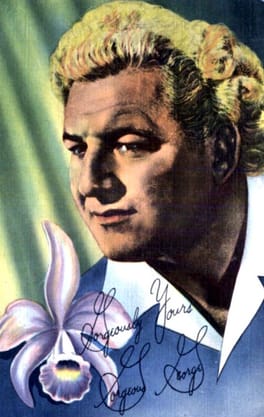
Photo: CurtTeich / Public domain (source: Wikimedia Commons)
Gorgeous George was a professional wrestler and actor, born on March 24, 1915 in Butte, Nebraska, United States. Death is recorded on December 26, 1963, at the age of 48. Education on record includes Milby High School. Awards on record include WWE Hall of Fame and Wrestling Observer Newsletter Hall of Fame. The listed height was 175 cm.
My Take
Gorgeous George is one of those figures I find genuinely pivotal, even if his name has faded. Watching how the histories describe him, I see a wrestler who understood that the show mattered as much as the contest. The flamboyant, theatrical heel he built in the 1940s and 1950s basically invented the template later stars would ride to fame. What strikes me is how a kid out of Butte, Nebraska turned outrage into box office, earning a spot in the WWE Hall of Fame. He died young, in 1963, but his influence on entertainment far outlasted him, and that staying power is what I respect most.
This take was written by generative AI, one per person, from publicly reported facts (editorial policy). It is a reading of the record, not reporting.
1. Profile
- Name (English)
- Gorgeous George
- Name (Japanese)
- ゴージャス・ジョージ
- Reading
- ごーじゃす・じょーじ
- Born
- March 24, 1915 – December 26, 1963
- Origin
- Butte, Nebraska, United States
- Height
- 175 cm
- Occupation
- professional wrestler / actor
- Zodiac / Chinese zodiac
- Aries / Rabbit
2. Background
- High school
- Milby High School
Awards & achievements
- WWE Hall of Fame
- Wrestling Observer Newsletter Hall of Fame
3. Links
4. About this entry
Tags
- Last updated
Facts are limited to publicly available information up to 2024; non-public or unconfirmed items are omitted. English text is machine-assisted (facts translated by Sonnet, "My Take" written by Opus 4.8). The Japanese page is the source of record.
Frequently asked questions
When was Gorgeous George born?
Born March 24, 1915.
When did Gorgeous George die?
Died December 26, 1963, aged 48.
Where was Gorgeous George from?
Gorgeous George was from Butte, Nebraska, United States.
What did Gorgeous George do?
Gorgeous George worked as professional wrestler, actor.
How tall was Gorgeous George?
Gorgeous George was 175 cm.
Professional wrestler — see all → · Actor — see all → · More people from the United States →