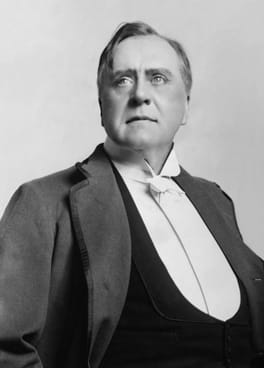
Photo: Bain News Service / Public domain (source: Wikimedia Commons)
Born on December 17, 1852 in Kensington, United Kingdom, Herbert Beerbohm Tree was a stage actor, film director and screenwriter. Herbert Beerbohm Tree died on July 2, 1917, aged 64. Recorded honors include Knight Bachelor.
My Take
Herbert Beerbohm Tree belongs to a vanished kind of theatrical giant, and I find him compelling for it. A late-Victorian and Edwardian actor-manager, he ran London's Haymarket Theatre, staging lavish, daring productions while starring in them himself, and was eventually knighted. Acting, directing, and running a theatre all at once is a feat of nerve I can barely imagine. We have almost no footage of him, so his art survives mostly through reputation and record, yet the sheer ambition reads clearly across a century. I'm drawn to performers who poured everything into the living, fleeting craft of the stage.
This take was written by generative AI, one per person, from publicly reported facts (editorial policy). It is a reading of the record, not reporting.
1. Profile
- Name (English)
- Herbert Beerbohm Tree
- Name (Japanese)
- ハーバート・ビアボーム・トリー
- Reading
- はーばーと・びあぼーむ・とりー
- Born
- December 17, 1852 – July 2, 1917
- Origin
- Kensington, United Kingdom
- Occupation
- stage actor / director / film director / screenwriter / actor-manager
- Zodiac / Chinese zodiac
- Sagittarius / Rat
2. Background
Awards & achievements
- Knight Bachelor
3. Links
- Wikipedia (English)https://en.wikipedia.org/wiki/Herbert%20Beerbohm%20Tree
- Wikidatahttps://www.wikidata.org/wiki/Q1352525
4. About this entry
Tags
- Last updated
Facts are limited to publicly available information up to 2024; non-public or unconfirmed items are omitted. English text is machine-assisted (facts translated by Sonnet, "My Take" written by Opus 4.8). The Japanese page is the source of record.
Frequently asked questions
When was Herbert Beerbohm Tree born?
Herbert Beerbohm Tree was born on December 17, 1852.
When did Herbert Beerbohm Tree die?
Herbert Beerbohm Tree died on July 2, 1917, aged 64.
Where was Herbert Beerbohm Tree from?
Herbert Beerbohm Tree was from Kensington, United Kingdom.
What did Herbert Beerbohm Tree do?
Herbert Beerbohm Tree worked as stage actor, director, film director, screenwriter, actor-manager.
Stage actor — see all → · Director — see all → · More people from the United Kingdom → · More people born on December 17 →