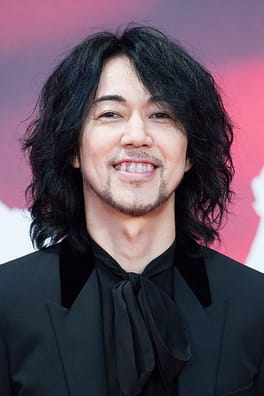
Photo: Dick Thomas Johnson from Tokyo, Japan / CC BY 2.0 (source: Wikimedia Commons)
My Take
I have a genuine soft spot for guitarists like Hideaki Kikuchi — the ones who aren't trying to be the face of the band but whose playing is so deeply embedded in the sound that you'd notice its absence immediately. Growing up in Hachioji and citing Joe Perry of Aerosmith as a hero tells you a lot: this is a guy who grew up worshipping that big, strutting rock guitar tone, then figured out how to transplant it into something distinctly Japanese. The Yellow Monkey's whole glam-meets-hard-rock thing in the 1990s wouldn't have landed the way it did without that foundation he was laying every night. Nihon University, a mid-80s debut, then joining the band in 1989 and riding it through to one of J-rock's more dramatic breakup-and-reunion arcs — that's a full career's worth of story right there. He keeps a low profile for someone who's played to arenas, which honestly just makes me respect the craft more.
This take was written by generative AI, one per person, from publicly reported facts (editorial policy). It is a reading of the record, not reporting.
Overview
Hideaki Kikuchi is a Japanese guitarist born on December 7, 1964, in Tokyo, Japan. He attended Nihon University. Raised in Hachiōji, he is best known as the lead guitarist of the rock band The Yellow Monkey, and made his major-label debut in 1986 with Killer May.
1. Profile
- Name (English)
- Hideaki Kikuchi
- Name (Japanese)
- 菊地英昭
- Reading
- きくち ひであき
- Born
- December 7, 1964 (age 61)
- Origin
- Tokyo, Japan
- Occupation
- Guitarist
- Zodiac / Chinese zodiac
- Sagittarius / Dragon
2. Background
- University
- Nihon University
3. Links
- Official sitehttps://www.baj-inc.com/#/artist/
- Wikipedia (Japanese)https://ja.wikipedia.org/wiki/%E8%8F%8A%E5%9C%B0%E8%8B%B1%E6%98%AD
- Wikidatahttps://www.wikidata.org/wiki/Q11619602
4. About this entry
Tags
- Last updated
Only publicly available facts are listed; non-public or unconfirmed items are omitted. Base data was compiled from Wikidata from June 2026 onward; ages are recalculated daily and deaths are checked against Wikidata on an ongoing basis. Works and profile fields sourced from Wikipedia reflect content as of 2026-08-26. English text is machine-assisted (facts translated by Sonnet, "My Take" written by Opus 4.8). The Japanese page is the source of record.
Frequently asked questions
When was Hideaki Kikuchi born?
Hideaki Kikuchi was born on December 7, 1964 and is 61 years old.
Where is Hideaki Kikuchi from?
Hideaki Kikuchi is from Tokyo, Japan.
What does Hideaki Kikuchi do?
Hideaki Kikuchi works as Guitarist.
Where did Hideaki Kikuchi study?
Hideaki Kikuchi attended Nihon University.
Guitarist — see all → · More people from Japan → · More people born on December 7 →