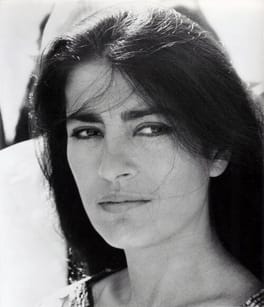
Photo: Josef Shaftel Productions Inc. / Public domain (source: Wikimedia Commons)
Irene Papas was born on September 3, 1926 in Corinthia Regional Unit, Greece. Irene Papas was an actor, singer and film director. Death is recorded on September 14, 2022, at the age of 96. Awards on record include National Board of Review Award for Best Actress (1971), Commandeur des Arts et des Lettres (1995), Commander of the Order of the Phoenix and 2 more.
My Take
Irene Papas was, to my eye, the rare actress who could command a frame with stillness alone. Born in Corinthia, she brought a sculptural face and a deep, resonant voice to more than seventy films, and her work in The Guns of Navarone, Zorba the Greek, and Z left an imprint that outlasts the films themselves. She sang, she directed, she earned honors across nations, yet what I remember is the gravity of her gaze. Even after her passing in 2022, she feels like a figure out of Greek tragedy made flesh. I cherish actors built on that kind of bone-deep intensity.
This take was written by generative AI, one per person, from publicly reported facts (editorial policy). It is a reading of the record, not reporting.
1. Profile
- Name (English)
- Irene Papas
- Name (Japanese)
- イレーネ・パパス
- Reading
- いれーね・ぱぱす
- Born
- September 3, 1926 – September 14, 2022
- Origin
- Corinthia Regional Unit, Greece
- Occupation
- actor / singer / film director / dancer
- Zodiac / Chinese zodiac
- Virgo / Tiger
2. Background
Awards & achievements
- 1971 National Board of Review Award for Best Actress
- 1995 Commandeur des Arts et des Lettres
- Commander of the Order of the Phoenix
- Knight Commander of the Order of Alfonso X
- 2001 honorary doctorate at the University of Rome Tor Vergata
3. Links
- Wikipedia (English)https://en.wikipedia.org/wiki/Irene%20Papas
- Wikipedia (Japanese)https://ja.wikipedia.org/wiki/%E3%82%A4%E3%83%AC%E3%83%BC%E3%83%8D%E3%83%BB%E3%83%91%E3%83%91%E3%82%B9
- Wikidatahttps://www.wikidata.org/wiki/Q230563
4. About this entry
Tags
- Last updated
Facts are limited to publicly available information up to 2024; non-public or unconfirmed items are omitted. English text is machine-assisted (facts translated by Sonnet, "My Take" written by Opus 4.8). The Japanese page is the source of record.
Frequently asked questions
When was Irene Papas born?
Irene Papas was born on September 3, 1926.
When did Irene Papas die?
Irene Papas died on September 14, 2022, aged 96.
Where was Irene Papas from?
Irene Papas was from Corinthia Regional Unit, Greece.
What did Irene Papas do?
Irene Papas worked as actor, singer, film director, dancer.
Actor — see all → · Singer — see all → · More people from Greece → · More people born on September 3 →