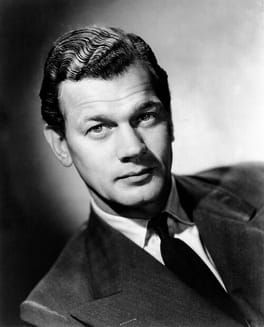
Photo: Photoplay Publishing Company; no photographer credited / Public domain (source: Wikimedia Commons)
Joseph Cotten was born on May 15, 1905 in Petersburg, Virginia, United States and was credited as a film actor, writer and autobiographer. Death is recorded on February 6, 1994, at the age of 88. Listed accolades include star on Hollywood Walk of Fame and Volpi Cup for Best Actor. Joseph Cotten was listed at 188 cm.
My Take
Joseph Cotten is one of those actors I keep coming back to precisely because he never felt like he was performing — he just inhabited his characters with an easy, southern-gentleman grace that made everyone around him look like they were working too hard. The Orson Welles years alone would be enough to cement any legacy: he was the moral compass in Citizen Kane, the doomed heir in The Magnificent Ambersons, and then — unforgettably — the naive foil to Welles's Harry Lime in The Third Man, holding the whole film together while the real villain charmed everyone else. What I love about Cotten is that he never overshadowed the room, yet the room always felt emptier without him. A tall, handsome Virginia gentleman who made restraint look like power.
This take was written by generative AI, one per person, from publicly reported facts (editorial policy). It is a reading of the record, not reporting.
1. Profile
- Name (English)
- Joseph Cotten
- Name (Japanese)
- ジョゼフ・コットン
- Reading
- じょぜふ・こっとん
- Born
- May 15, 1905 – February 6, 1994
- Origin
- Petersburg, Virginia, United States
- Height
- 188 cm
- Occupation
- film actor / writer / autobiographer / stage actor / television actor
- Zodiac / Chinese zodiac
- Taurus / Snake
2. Background
Awards & achievements
- star on Hollywood Walk of Fame
- Volpi Cup for Best Actor
3. Links
4. About this entry
Tags
- Last updated
Only publicly available facts are listed; non-public or unconfirmed items are omitted. Base data was compiled from Wikidata from June 2026 onward; ages are recalculated daily and deaths are checked against Wikidata on an ongoing basis. English text is machine-assisted (facts translated by Sonnet, "My Take" written by Opus 4.8). The Japanese page is the source of record.
Frequently asked questions
When was Joseph Cotten born?
Joseph Cotten was born on May 15, 1905.
When did Joseph Cotten die?
Joseph Cotten died on February 6, 1994, aged 88.
Where was Joseph Cotten from?
Joseph Cotten was from Petersburg, Virginia, United States.
What did Joseph Cotten do?
Joseph Cotten worked as film actor, writer, autobiographer, stage actor, television actor.
How tall was Joseph Cotten?
Joseph Cotten was 188 cm tall.
Film actor — see all → · Writer — see all → · More people from the United States → · More people born on May 15 →