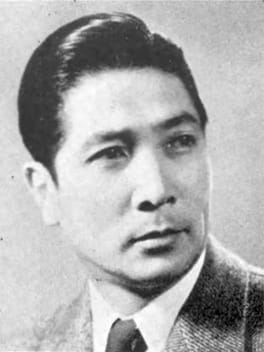
Photo: 東映株式会社 / Public domain (source: Wikimedia Commons)
My Take
Born in 1905 in Kure — a city that was basically synonymous with the Imperial Japanese Navy — Kensaku Hara grew up in a world that no longer exists, and the fact that he kept working as an actor all the way through it is quietly staggering to me. Think about what that career arc actually contains: silent era, talkies, wartime propaganda films, postwar reconstruction, the birth of Japanese television, all of it. He lived 96 years and died in 2002, which means he was around long enough to see the internet. I don't know the specifics of every role he played, but honestly the biography itself is the performance — a man from a naval town in Hiroshima who just kept showing up, kept working, and outlasted entire eras of Japanese history. That kind of quiet endurance is its own kind of artistry.
This take was written by generative AI, one per person, from publicly reported facts (editorial policy). It is a reading of the record, not reporting.
Overview
Kensaku Hara was a Japanese actor born on April 23, 1905, in Kure, Hiroshima Prefecture. He pursued a career in acting that spanned the prewar, wartime, and postwar eras of Japanese film and television. He lived to the age of 96, passing away on February 7, 2002.
1. Profile
- Name (English)
- Kensaku Hara
- Name (Japanese)
- 原健策
- Reading
- はら けんさく
- Born
- April 23, 1905 – February 7, 2002
- Origin
- Kure, Hiroshima, Japan
- Occupation
- Actor
- Zodiac / Chinese zodiac
- Taurus / Snake
2. Links
- Wikipedia (Japanese)https://ja.wikipedia.org/wiki/%E5%8E%9F%E5%81%A5%E7%AD%96
- Wikidatahttps://www.wikidata.org/wiki/Q11409407
3. About this entry
Tags
- Last updated
Facts are limited to publicly available information up to 2024; non-public or unconfirmed items are omitted. English text is machine-assisted (facts translated by Sonnet, "My Take" written by Opus 4.8). The Japanese page is the source of record.
Frequently asked questions
When was Kensaku Hara born?
Born April 23, 1905.
When did Kensaku Hara die?
Died February 7, 2002, aged 96.
Where was Kensaku Hara from?
Kensaku Hara was from Kure, Hiroshima, Japan.
What did Kensaku Hara do?
Kensaku Hara worked as Actor.