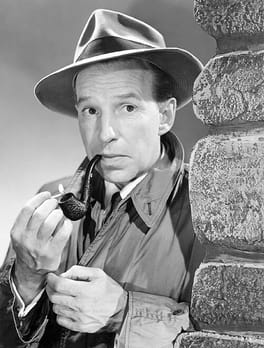
Photo: NBC Television / Public domain (source: Wikimedia Commons)
Lloyd Nolan was a film actor and television actor, born on August 11, 1902 in San Francisco, California, United States. Lloyd Nolan died on September 27, 1985 at the age of 83. Schooling on record includes Stanford University. Listed accolades include Primetime Emmy Award for Outstanding Lead Actor in a Miniseries or a Movie (1956), star on Hollywood Walk of Fame and Donaldson Awards.
My Take
Lloyd Nolan fascinates me as a study in patience. He spent years as a dependable B-movie lead and supporting player before his Captain Queeg in The Caine Mutiny Court-Martial finally announced his full range to the world, capped by a 1956 Emmy. I love performers whose breakthrough comes not from youth or hype but from decades of accumulated craft. Nolan was the sort of actor who tightened a scene the moment he entered it, the reliable professional every great film quietly depends on. A Walk of Fame star and a career built on steady excellence rather than spectacle.
This take was written by generative AI, one per person, from publicly reported facts (editorial policy). It is a reading of the record, not reporting.
1. Profile
- Name (English)
- Lloyd Nolan
- Name (Japanese)
- ロイド・ノーラン
- Reading
- ろいど・のーらん
- Born
- August 11, 1902 – September 27, 1985
- Origin
- San Francisco, California, United States
- Occupation
- actor / film actor / television actor
- Zodiac / Chinese zodiac
- Leo / Tiger
2. Background
- University
- Stanford University
Awards & achievements
- 1956 Primetime Emmy Award for Outstanding Lead Actor in a Miniseries or a Movie
- star on Hollywood Walk of Fame
- Donaldson Awards
3. Links
- Wikipedia (English)https://en.wikipedia.org/wiki/Lloyd%20Nolan
- Wikipedia (Japanese)https://ja.wikipedia.org/wiki/%E3%83%AD%E3%82%A4%E3%83%89%E3%83%BB%E3%83%8E%E3%83%BC%E3%83%A9%E3%83%B3
- Wikidatahttps://www.wikidata.org/wiki/Q280666
4. About this entry
Tags
- Last updated
Facts are limited to publicly available information up to 2024; non-public or unconfirmed items are omitted. English text is machine-assisted (facts translated by Sonnet, "My Take" written by Opus 4.8). The Japanese page is the source of record.
Frequently asked questions
When was Lloyd Nolan born?
Born August 11, 1902.
When did Lloyd Nolan die?
Died September 27, 1985, aged 83.
Where was Lloyd Nolan from?
Lloyd Nolan was from San Francisco, California, United States.
What did Lloyd Nolan do?
Lloyd Nolan worked as actor, film actor, television actor.
Actor — see all → · Film actor — see all → · More people from the United States →