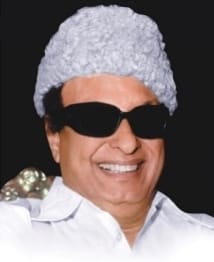
Photo: India Post, Government of India / GODL-India (source: Wikimedia Commons)
M. G. Ramachandran, born on January 17, 1917 in Kandy, Central Province, Sri Lanka, was a film actor, politician and film director. M. G. Ramachandran died on December 24, 1987, aged 70. Schooling on record includes University of Madras. Awards on record include Filmfare Special Award – South (1965), Bharat Ratna (1988) and National Film Award for Best Actor (1972).
My Take
M. G. Ramachandran is, to me, the most complete example of cinema converting directly into political power. Plenty of actors have run for office; almost none built a governing party, ran a state for a decade, and earned the Bharat Ratna after death. What strikes me is how deliberately he fused his on-screen persona, the protector of the poor, with real welfare policy, so audiences never felt a gap between the hero and the man. You can question the populism, but not the bond he forged with Tamil Nadu's people. Decades later that devotion still shapes the state's politics. That is mythmaking of the highest order.
This take was written by generative AI, one per person, from publicly reported facts (editorial policy). It is a reading of the record, not reporting.
1. Profile
- Name (English)
- M. G. Ramachandran
- Name (Japanese)
- M・G・ラマチャンドラン
- Reading
- M・G・らまちゃんどらん
- Born
- January 17, 1917 – December 24, 1987
- Origin
- Kandy, Central Province, Sri Lanka
- Occupation
- actor / film actor / politician / film director / screenwriter
- Zodiac / Chinese zodiac
- Capricorn / Snake
2. Background
- University
- University of Madras
Awards & achievements
- 1965 Filmfare Special Award – South
- 1988 Bharat Ratna
- 1972 National Film Award for Best Actor
3. Links
- Wikipedia (English)https://en.wikipedia.org/wiki/M.%20G.%20Ramachandran
- Wikidatahttps://www.wikidata.org/wiki/Q127868
4. About this entry
Tags
- Last updated
Facts are limited to publicly available information up to 2024; non-public or unconfirmed items are omitted. English text is machine-assisted (facts translated by Sonnet, "My Take" written by Opus 4.8). The Japanese page is the source of record.
Frequently asked questions
When was M. G. Ramachandran born?
Born January 17, 1917.
When did M. G. Ramachandran die?
Died December 24, 1987, aged 70.
Where was M. G. Ramachandran from?
M. G. Ramachandran was from Kandy, Central Province, Sri Lanka.
What did M. G. Ramachandran do?
M. G. Ramachandran worked as actor, film actor, politician, film director, screenwriter.
Actor — see all → · Film actor — see all → · More people from Sri Lanka →