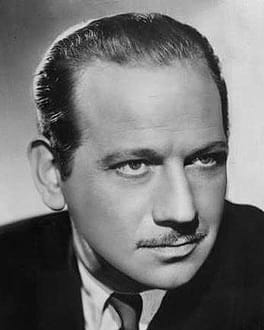
Photo: Studio publicity still / Public domain (source: Wikimedia Commons)
Melvyn Douglas was born on April 5, 1901 in Macon, Georgia, United States and was credited as a television actor, film actor and stage actor. Death is recorded on August 4, 1981, at the age of 80. Education on record includes Upper Canada College. Recorded honors include Academy Award for Best Supporting Actor (1964, 1980), Tony Award for Best Actor in a Play (1960), Primetime Emmy Award for Outstanding Lead Actor in a Miniseries or a Movie (1968) and 1 more.
My Take
Melvyn Douglas belongs to a tiny club, one of only twenty-four performers to claim the Triple Crown of Acting, with two Oscars, an Emmy, and a Tony. To me that's less about trophies and more about astonishing longevity: a career running from the late 1920s into the early 1980s, evolving from leading-man charm to the weathered gravitas of his late character work. The Macon-born actor only got richer as he aged, winning his second Academy Award the year before he died. I deeply admire that refusal to coast, the way he kept deepening his craft right up to the end.
This take was written by generative AI, one per person, from publicly reported facts (editorial policy). It is a reading of the record, not reporting.
1. Profile
- Name (English)
- Melvyn Douglas
- Name (Japanese)
- メルヴィン・ダグラス
- Reading
- めるゔぃん・だぐらす
- Born
- April 5, 1901 – August 4, 1981
- Origin
- Macon, Georgia, United States
- Occupation
- television actor / film actor / stage actor / actor
- Zodiac / Chinese zodiac
- Aries / Ox
2. Background
- University
- Upper Canada College
Awards & achievements
- 1964 Academy Award for Best Supporting Actor
- 1980 Academy Award for Best Supporting Actor
- 1960 Tony Award for Best Actor in a Play
- 1968 Primetime Emmy Award for Outstanding Lead Actor in a Miniseries or a Movie
- star on Hollywood Walk of Fame
3. Links
4. About this entry
Tags
- Last updated
Facts are limited to publicly available information up to 2024; non-public or unconfirmed items are omitted. English text is machine-assisted (facts translated by Sonnet, "My Take" written by Opus 4.8). The Japanese page is the source of record.
Frequently asked questions
When was Melvyn Douglas born?
Melvyn Douglas was born on April 5, 1901.
When did Melvyn Douglas die?
Melvyn Douglas died on August 4, 1981, aged 80.
Where was Melvyn Douglas from?
Melvyn Douglas was from Macon, Georgia, United States.
What did Melvyn Douglas do?
Melvyn Douglas worked as television actor, film actor, stage actor, actor.
Where did Melvyn Douglas study?
Melvyn Douglas attended Upper Canada College.
Television actor — see all → · Film actor — see all → · More people from the United States → · More people born on April 5 →