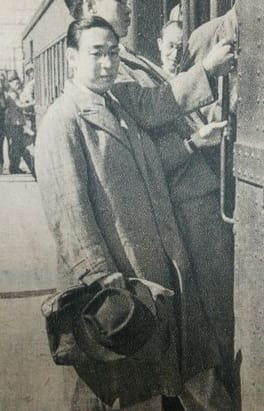
Photo: 朝日新聞社 / Public domain (source: Wikimedia Commons)
My Take
I'll be honest, I never got to see Onoe Baikō VII on a kabuki stage, but the name alone makes me sit up a little straighter. A Tokyo kid born back in 1915, he gave his life to the onnagata craft, those female roles played by men, and that art still amazes me: a man conjuring a grace and quiet allure that somehow reads as more womanly than the real thing. That takes decades of patience, and you can feel it in the fact that he was named a Person of Cultural Merit in 1994, just a year before he passed. I love that kind of slow, unglamorous mastery, the type that doesn't trend but lingers. I imagine anyone lucky enough to catch him remembers that hush he could bring to a room. Pure respect from me.
This take was written by generative AI, one per person, from publicly reported facts (editorial policy). It is a reading of the record, not reporting.
Overview
Onoe Baikō VII (1915–1995) was a Japanese kabuki actor born in Tokyo, celebrated as one of the foremost onnagata — performers who specialize in female roles — of the twentieth century. He devoted his career to the traditional stage arts of kabuki, earning wide recognition for the refinement and depth he brought to female characterizations. In 1994, one year before his death, he was designated a Person of Cultural Merit (Bunka Kōrōsha) by the Japanese government in recognition of his lifelong contributions to national culture. He passed away on March 24, 1995.
1. Profile
- Name (English)
- Onoe Baikō VII
- Name (Japanese)
- 七代目 尾上梅幸
- Reading
- おのえ ばいこう
- Born
- August 31, 1915 – March 24, 1995
- Origin
- Tokyo, Japan
- Occupation
- Kabuki actor / Actor
- Zodiac / Chinese zodiac
- Virgo / Rabbit
2. Background
Awards & achievements
- 1994 — Person of Cultural Merit (Bunka Kōrōsha)
3. Links
4. About this entry
Tags
- Last updated
Only publicly available facts are listed; non-public or unconfirmed items are omitted. Base data was compiled from Wikidata from June 2026 onward; ages are recalculated daily and deaths are checked against Wikidata on an ongoing basis. English text is machine-assisted (facts translated by Sonnet, "My Take" written by Opus 4.8). The Japanese page is the source of record.
Frequently asked questions
When was Onoe Baikō VII born?
Onoe Baikō VII was born on August 31, 1915.
When did Onoe Baikō VII die?
Onoe Baikō VII died on March 24, 1995, aged 79.
Where was Onoe Baikō VII from?
Onoe Baikō VII was from Tokyo, Japan.
What did Onoe Baikō VII do?
Onoe Baikō VII worked as Kabuki actor, Actor.
Kabuki actor — see all → · Actor — see all → · More people from Japan → · More people born on August 31 →