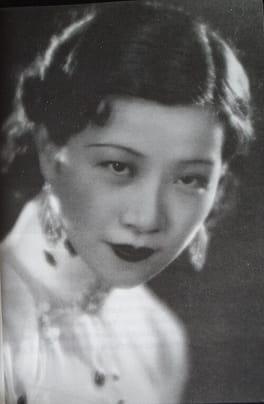
Photo: Unknown author / Public domain (source: Wikimedia Commons)
Ruan Lingyu was listed as a film actor. Ruan Lingyu was born in Shanghai, People's Republic of China on April 26, 1910. Death is recorded on March 8, 1935, at the age of 24.
My Take
Ruan Lingyu is one of those figures whose tragedy almost eclipses her talent, and that bothers me a little. She was among the brightest stars of 1930s Chinese silent cinema, and accounts of her expressive, subtle acting suggest a performer well ahead of her era. Her suicide at just 24 turned her into a permanent icon, but I'd rather remember the craft than the ending. Knowing her also as Lily Yuen, I think of how short a window she had to leave such a mark. For me she's essential viewing for anyone curious about early Chinese film history.
This take was written by generative AI, one per person, from publicly reported facts (editorial policy). It is a reading of the record, not reporting.
1. Profile
- Name (English)
- Ruan Lingyu
- Name (Japanese)
- 阮玲玉
- Reading
- げん・れいぎょく
- Born
- April 26, 1910 – March 8, 1935
- Origin
- Shanghai, People's Republic of China
- Occupation
- actor / film actor
- Zodiac / Chinese zodiac
- Taurus / Dog
2. Links
- Wikipedia (English)https://en.wikipedia.org/wiki/Ruan%20Lingyu
- Wikipedia (Japanese)https://ja.wikipedia.org/wiki/%E9%98%AE%E7%8E%B2%E7%8E%89
- Wikidatahttps://www.wikidata.org/wiki/Q254196
3. About this entry
Tags
- Last updated
Facts are limited to publicly available information up to 2024; non-public or unconfirmed items are omitted. English text is machine-assisted (facts translated by Sonnet, "My Take" written by Opus 4.8). The Japanese page is the source of record.
Frequently asked questions
When was Ruan Lingyu born?
Born April 26, 1910.
When did Ruan Lingyu die?
Died March 8, 1935, aged 24.
Where was Ruan Lingyu from?
Ruan Lingyu was from Shanghai, People's Republic of China.
What did Ruan Lingyu do?
Ruan Lingyu worked as actor, film actor.
Actor — see all → · Film actor — see all → · More people from the People's Republic of China →