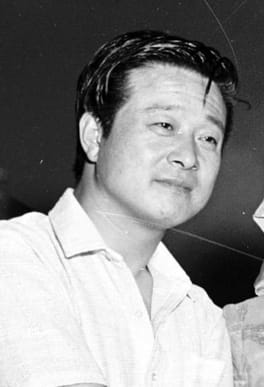
Photo: Photographer Pan Yuekang of the Central News Agency / Public domain (source: Wikimedia Commons)
Shin Sang-ok, born on October 11, 1926 in Chongjin, North Hamgyong Province, North Korea, was a film director, film producer and screenwriter. Shin Sang-ok died on April 11, 2006, aged 79. Schooling on record includes Tokyo University of the Arts. Listed accolades include Order of Cultural Merit and Grand Bell Awards.
My Take
Shin Sang-ok is one of those figures whose life story genuinely outpaces anything he could have put on screen — and he put a lot on screen, directing 74 films over five decades and virtually building South Korean cinema's golden age in the 1950s and '60s with his wife and frequent collaborator Choi Eun-hee. What still blows my mind is that in 1978 he was kidnapped on behalf of Kim Jong-il, who wanted a real filmmaker to revitalize North Korean cinema, and Shin ended up actually making films there before eventually escaping through the Austrian embassy in Vienna in 1986. A man trained at Tokyo University of the Arts, recipient of South Korea's Order of Cultural Merit, held captive by a dictator who was a film buff — you genuinely cannot make this up. He passed away in 2006, but the foundation he laid for Korean cinema reverberates all the way to Parasite and beyond.
This take was written by generative AI, one per person, from publicly reported facts (editorial policy). It is a reading of the record, not reporting.
1. Profile
- Name (English)
- Shin Sang-ok
- Name (Japanese)
- 申相玉
- Reading
- しん・さんおく
- Born
- October 11, 1926 – April 11, 2006
- Origin
- Chongjin, North Hamgyong Province, North Korea
- Occupation
- film director / film producer / screenwriter / manufacturer / director
- Zodiac / Chinese zodiac
- Libra / Tiger
2. Background
- University
- Tokyo University of the Arts
Awards & achievements
- Order of Cultural Merit
- Grand Bell Awards
3. Links
- Wikipedia (English)https://en.wikipedia.org/wiki/Shin%20Sang-ok
- Wikipedia (Japanese)https://ja.wikipedia.org/wiki/%E7%94%B3%E7%9B%B8%E7%8E%89
- Wikidatahttps://www.wikidata.org/wiki/Q495748
4. About this entry
Tags
- Last updated
Facts are limited to publicly available information up to 2024; non-public or unconfirmed items are omitted. English text is machine-assisted (facts translated by Sonnet, "My Take" written by Opus 4.8). The Japanese page is the source of record.
Frequently asked questions
When was Shin Sang-ok born?
Born October 11, 1926.
When did Shin Sang-ok die?
Died April 11, 2006, aged 79.
Where was Shin Sang-ok from?
Shin Sang-ok was from Chongjin, North Hamgyong Province, North Korea.
What did Shin Sang-ok do?
Shin Sang-ok worked as film director, film producer, screenwriter, manufacturer, director.
Film director — see all → · Film producer — see all → · More people from North Korea →