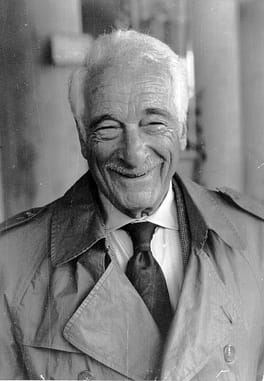
Photo: Jesper Jurcenoks / CC BY-SA 3.0 (source: Wikimedia Commons)
Born on January 3, 1909 in Copenhagen, Denmark, Victor Borge was a conductor, pianist and stand-up comedian. Victor Borge died on December 23, 2000, aged 91. Awards on record include Honorary craftsman (1977), Kennedy Center Honors, Royal Order of Vasa and 5 more.
My Take
Victor Borge was one of those rare humans who made you feel like a genius and a fool at the same time — he'd be playing Beethoven with the technique of a concert master, and then suddenly punctuate the music with a perfectly timed sound effect that made the whole hall dissolve into laughter. Born in Copenhagen in 1909, he fled Nazi-occupied Denmark and reinvented himself in America, becoming a beloved fixture on radio and television for decades. The nicknames said it all: "The Clown Prince of Denmark," "The Unmelancholy Dane" — a man who understood that comedy and classical music weren't opposites but old friends. Watching him was like seeing two lifetimes of talent share one body, and honestly, nobody has pulled off that exact trick since.
This take was written by generative AI, one per person, from publicly reported facts (editorial policy). It is a reading of the record, not reporting.
1. Profile
- Name (English)
- Victor Borge
- Name (Japanese)
- ヴィクター・ボーグ
- Reading
- ゔぃくたー・ぼーぐ
- Born
- January 3, 1909 – December 23, 2000
- Origin
- Copenhagen, Denmark
- Occupation
- conductor / pianist / stand-up comedian / composer / actor
- Zodiac / Chinese zodiac
- Capricorn / Rooster
2. Background
Awards & achievements
- 1977 Honorary craftsman
- Kennedy Center Honors
- Royal Order of Vasa
- 1972 Knight First Class of the Order of St. Olav
- Order of the White Rose of Finland
- 1956 Knight of the Order of the Dannebrog
- Order of the Falcon
- commander of the Order of the Dannebrog
3. Links
4. About this entry
Tags
- Last updated
Only publicly available facts are listed; non-public or unconfirmed items are omitted. Base data was compiled from Wikidata from June 2026 onward; ages are recalculated daily and deaths are checked against Wikidata on an ongoing basis. English text is machine-assisted (facts translated by Sonnet, "My Take" written by Opus 4.8). The Japanese page is the source of record.
Frequently asked questions
When was Victor Borge born?
Victor Borge was born on January 3, 1909.
When did Victor Borge die?
Victor Borge died on December 23, 2000, aged 91.
Where was Victor Borge from?
Victor Borge was from Copenhagen, Denmark.
What did Victor Borge do?
Victor Borge worked as conductor, pianist, stand-up comedian, composer, actor.
Conductor — see all → · Pianist — see all → · More people from Denmark → · More people born on January 3 →