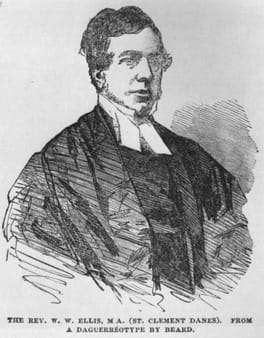
Photo: User Cvene64 on en.wikipedia / Public domain (source: Wikimedia Commons)
William Webb Ellis was a rugby union player, cleric and inventor, born on November 24, 1806 in Salford, United Kingdom. William Webb Ellis died on February 24, 1872 at the age of 65. Education on record includes Brasenose College.
My Take
What gets me about William Webb Ellis is how a single schoolboy moment in 1823 — picking up the ball and running with it — got mythologized into the origin of an entire global sport. I lean skeptical: the story surfaced decades later, and historians have long doubted it's literally true. But honestly, that almost makes it more interesting to me. Rugby needed a founding legend, and an Anglican clergyman from Salford who later studied at Brasenose got drafted into the role. The trophy that bears his name now outshines the man. I find that gap between the person and the legend genuinely fascinating.
This take was written by generative AI, one per person, from publicly reported facts (editorial policy). It is a reading of the record, not reporting.
1. Profile
- Name (English)
- William Webb Ellis
- Name (Japanese)
- ウィリアム・ウェッブ・エリス
- Reading
- うぃりあむ・うぇっぶ・えりす
- Born
- November 24, 1806 – February 24, 1872
- Origin
- Salford, United Kingdom
- Occupation
- rugby union player / cleric / inventor / cricketer
- Zodiac / Chinese zodiac
- Sagittarius / Tiger
2. Background
- University
- Brasenose College
3. Links
4. About this entry
Tags
- Last updated
Facts are limited to publicly available information up to 2024; non-public or unconfirmed items are omitted. English text is machine-assisted (facts translated by Sonnet, "My Take" written by Opus 4.8). The Japanese page is the source of record.
Frequently asked questions
When was William Webb Ellis born?
Born November 24, 1806.
When did William Webb Ellis die?
Died February 24, 1872, aged 65.
Where was William Webb Ellis from?
William Webb Ellis was from Salford, United Kingdom.
What did William Webb Ellis do?
William Webb Ellis worked as rugby union player, cleric, inventor, cricketer.
Rugby union player — see all → · More people from the United Kingdom →