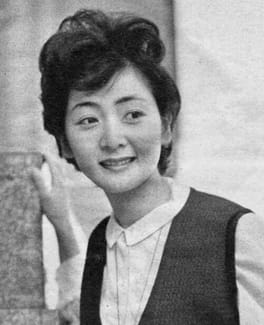
Photo: 桃園書房 / Public domain (source: Wikimedia Commons)
My Take
I have a soft spot for people who shape a whole generation without ever chasing the spotlight, and Yoshiko Mari is exactly that. She passed an NHK audition in 1961 while still a university student, became the very first "singing big sister" of Okaasan to Issho, and quietly became the voice of childhood for an enormous swath of postwar Japan. Her version of Omocha no Cha-Cha-Cha is one of those songs that's so embedded in the culture it barely feels like it had an author anymore, which is honestly the highest compliment a children's performer can receive. The fact that she came out of Tokyo University of the Arts and went on to teach at university level tells you this wasn't a novelty act — there was real craft underneath the warmth. Not flashy, not famous in the pop-star sense, but the kind of presence that sticks with people for decades without them even realizing why.
This take was written by generative AI, one per person, from publicly reported facts (editorial policy). It is a reading of the record, not reporting.
Overview
Yoshiko Mari is a Japanese singer born on December 4, 1938, in Gifu Prefecture, Japan. She studied at Tokyo University of the Arts. Further details of her career and personal life have not been made public.
1. Profile
- Name (English)
- Yoshiko Mari
- Name (Japanese)
- 眞理ヨシコ
- Reading
- まり よしこ
- Born
- December 4, 1938 (age 87)
- Origin
- Gifu Prefecture, Japan
- Occupation
- Singer
- Zodiac / Chinese zodiac
- Sagittarius / Tiger
2. Background
- University
- Tokyo University of the Arts
3. Works & records
Works summary
- Works
- 5 (1975–1979)
- By year (titles with a known year)
- 1975: 1, 1977: 1, 1979: 1, year unknown: 2
- Debut work
- おはようワイド・土曜の朝に - 初代アシスタント
Filmography / notable works
| Category | Title | Year |
|---|---|---|
| TV program | プリンプリン物語 - ヘドロの声 | 1979 |
| TV program | 笛吹童子 | 1977 |
| TV program | おはようワイド・土曜の朝に - 初代アシスタント | 1975 |
| TV program | おかあさんといっしょ | |
| TV program | 生きものばんざい |
4. Links
5. About this entry
Tags
- Last updated
Only publicly available facts are listed; non-public or unconfirmed items are omitted. Base data was compiled from Wikidata from June 2026 onward; ages are recalculated daily and deaths are checked against Wikidata on an ongoing basis. Works and profile fields sourced from Wikipedia reflect content as of 2026-08-26. English text is machine-assisted (facts translated by Sonnet, "My Take" written by Opus 4.8). The Japanese page is the source of record.
Frequently asked questions
When was Yoshiko Mari born?
Yoshiko Mari was born on December 4, 1938 and is 87 years old.
Where is Yoshiko Mari from?
Yoshiko Mari is from Gifu Prefecture, Japan.
What does Yoshiko Mari do?
Yoshiko Mari works as Singer.
Where did Yoshiko Mari study?
Yoshiko Mari attended Tokyo University of the Arts.
Singer — see all → · More people from Japan → · More people born on December 4 →