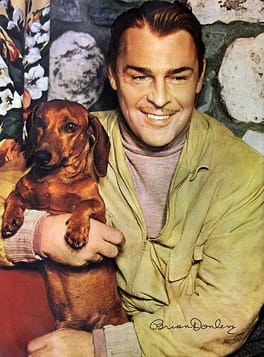
Photo: Macfadden Publications-page 2. / Public domain (source: Wikimedia Commons)
Brian Donlevy, born on February 9, 1901 in Cleveland, Ohio, United States, was a stage actor, film actor and television actor. Brian Donlevy died on April 5, 1972 at the age of 71. Awards on record include star on Hollywood Walk of Fame.
My Take
Brian Donlevy is exactly the kind of actor I find myself rooting for. He never had the matinee-idol gloss, but he owned the screen as a tough, dangerous heavy, especially in film noir, where moral murk suited him perfectly. That Beau Geste Oscar nomination in 1939 confirms what I sense: he was at his best in support, sharpening the leads around him. There is something honest about a performer from Cleveland building a Hollywood career on menace and grit rather than charm. Decades after his 1972 death, that star on the Walk of Fame feels well earned. I have deep respect for character actors like him.
This take was written by generative AI, one per person, from publicly reported facts (editorial policy). It is a reading of the record, not reporting.
1. Profile
- Name (English)
- Brian Donlevy
- Name (Japanese)
- ブライアン・ドンレヴィ
- Reading
- ぶらいあん・どんれゔぃ
- Born
- February 9, 1901 – April 5, 1972
- Origin
- Cleveland, Ohio, United States
- Occupation
- stage actor / film actor / television actor / film producer / actor
- Zodiac / Chinese zodiac
- Aquarius / Ox
2. Background
Awards & achievements
- star on Hollywood Walk of Fame
3. Links
4. About this entry
Tags
- Last updated
Facts are limited to publicly available information up to 2024; non-public or unconfirmed items are omitted. English text is machine-assisted (facts translated by Sonnet, "My Take" written by Opus 4.8). The Japanese page is the source of record.
Frequently asked questions
When was Brian Donlevy born?
Born February 9, 1901.
When did Brian Donlevy die?
Died April 5, 1972, aged 71.
Where was Brian Donlevy from?
Brian Donlevy was from Cleveland, Ohio, United States.
What did Brian Donlevy do?
Brian Donlevy worked as stage actor, film actor, television actor, film producer, actor.
Stage actor — see all → · Film actor — see all → · More people from the United States →