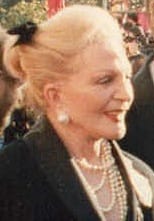
Photo: Alan Light → https://www.flickr.com/photos/alan-light/252956290 / CC BY 2.0 (source: Wikimedia Commons)
Coral Browne was born on July 23, 1913 in Melbourne, Victoria, Australia and was credited as a stage actor, film actor and television actor. Coral Browne died on May 29, 1991 at the age of 77. Listed accolades include British Academy Television Awards (1984).
My Take
Coral Browne is the kind of actress I genuinely admire. Born in Melbourne in 1913, she conquered stage and screen across two continents, from Broadway's Macbeth to film and television. What floors me is that she won the BAFTA TV Award for An Englishman Abroad at seventy, proof that her edge only sharpened with age. By reputation she was famously sharp-tongued, and I love performers whose steel shows through. Hers is a career that argues against the idea that actresses fade; she simply got better. Long after her death in 1991, that uncompromising presence still commands respect from me.
This take was written by generative AI, one per person, from publicly reported facts (editorial policy). It is a reading of the record, not reporting.
1. Profile
- Name (English)
- Coral Browne
- Name (Japanese)
- コーラル・ブラウン
- Reading
- こーらる・ぶらうん
- Born
- July 23, 1913 – May 29, 1991
- Origin
- Melbourne, Victoria, Australia
- Occupation
- stage actor / film actor / television actor / voice actor / actor
- Zodiac / Chinese zodiac
- Leo / Ox
2. Background
Awards & achievements
- 1984 British Academy Television Awards
3. Links
- Wikipedia (English)https://en.wikipedia.org/wiki/Coral%20Browne
- Wikidatahttps://www.wikidata.org/wiki/Q508226
4. About this entry
Tags
- Last updated
Facts are limited to publicly available information up to 2024; non-public or unconfirmed items are omitted. English text is machine-assisted (facts translated by Sonnet, "My Take" written by Opus 4.8). The Japanese page is the source of record.
Frequently asked questions
When was Coral Browne born?
Coral Browne was born on July 23, 1913.
When did Coral Browne die?
Coral Browne died on May 29, 1991, aged 77.
Where was Coral Browne from?
Coral Browne was from Melbourne, Victoria, Australia.
What did Coral Browne do?
Coral Browne worked as stage actor, film actor, television actor, voice actor, actor.
Stage actor — see all → · Film actor — see all → · More people from Australia → · More people born on July 23 →