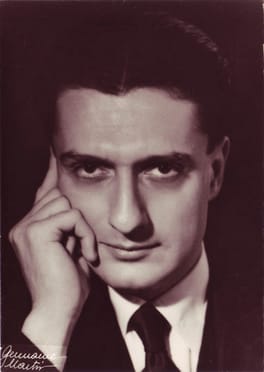
Photo: Germaine Martin (see: Bibliothèque nationale de France [1]) / CC BY-SA 3.0 (source: Wikimedia Commons)
Dinu Lipatti was born on March 19, 1917 in Bucharest, Romania and was credited as a pianist, composer and music arranger. Dinu Lipatti died on December 2, 1950 at the age of 33. Education on record includes Gheorghe Lazăr National College.
My Take
There are pianists who play the notes, and then there's Dinu Lipatti — a Romanian who packed several lifetimes of musical insight into just 33 years. I keep coming back to his recordings because they feel almost impossibly lucid: his Bach is architectural without being cold, his Chopin is tender without ever tipping into sentimentality, and his Mozart sounds like the composer himself might have approved. The tragedy of his story is real — Hodgkin's disease took him in 1950 — but what gets me most is his final Besançon recital recording, where he pushed through illness to play and still managed to leave something transcendent on tape. History has not been kind enough in keeping his name in everyday conversation, but anyone who discovers him tends to stay discovered.
This take was written by generative AI, one per person, from publicly reported facts (editorial policy). It is a reading of the record, not reporting.
1. Profile
- Name (English)
- Dinu Lipatti
- Name (Japanese)
- ディヌ・リパッティ
- Reading
- でぃぬ・りぱってぃ
- Born
- March 19, 1917 – December 2, 1950
- Origin
- Bucharest, Romania
- Occupation
- pianist / composer / music arranger / musician
- Zodiac / Chinese zodiac
- Pisces / Snake
2. Background
- University
- Gheorghe Lazăr National College
3. Links
4. About this entry
Tags
- Last updated
Facts are limited to publicly available information up to 2024; non-public or unconfirmed items are omitted. English text is machine-assisted (facts translated by Sonnet, "My Take" written by Opus 4.8). The Japanese page is the source of record.
Frequently asked questions
When was Dinu Lipatti born?
Born March 19, 1917.
When did Dinu Lipatti die?
Died December 2, 1950, aged 33.
Where was Dinu Lipatti from?
Dinu Lipatti was from Bucharest, Romania.
What did Dinu Lipatti do?
Dinu Lipatti worked as pianist, composer, music arranger, musician.
Pianist — see all → · Composer — see all → · More people from Romania →