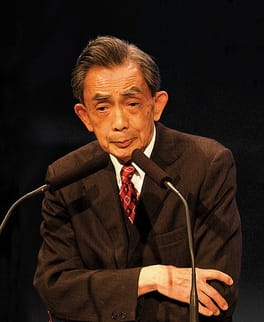
Photo: Photographe de la Ville de Saint-Dié-des-Vosges, dans le cadre de sa mission ; scan par Ji-Elle / CC BY-SA 4.0 (source: Wikimedia Commons)
François Cheng is credited as a writer, poet and essayist. Born on August 30, 1929, François Cheng is from Nanchang, People's Republic of China. The age as of 2026 is 97. Schooling on record includes Nanjing University. Recorded honors include Officer of the Legion of Honour, Commandeur des Arts et des Lettres, Prix Femina (1998) and 4 more.
My Take
François Cheng is one of those rare figures who makes me believe a person can truly live between two worlds. Born in Nanchang and schooled in Nanjing, he reinvented himself in a foreign tongue and ended up an immortel of the Académie française, writing poems and novels in French while still carrying China in his brush. The Prix Femina, the Legion of Honour, the honors for arts and letters: they all matter, but what moves me is the quiet stubbornness of a man who refused to choose between East and West and instead built a bridge. I find his whole life genuinely inspiring.
This take was written by generative AI, one per person, from publicly reported facts (editorial policy). It is a reading of the record, not reporting.
1. Profile
- Name (English)
- François Cheng
- Name (Japanese)
- フランソワ・チェン
- Reading
- ふらんそわ・ちぇん
- Born
- August 30, 1929 (age 97)
- Origin
- Nanchang, People's Republic of China
- Occupation
- writer / poet / essayist / translator / calligrapher
- Zodiac / Chinese zodiac
- Virgo / Snake
2. Background
- University
- Nanjing University
Awards & achievements
- Officer of the Legion of Honour
- Commandeur des Arts et des Lettres
- 1998 Prix Femina
- 2001 Grand prix de la francophonie
- Knight of the French Order of Academic Palms
- 2014 honorary doctor of the Shandong University
- 2017 prix de l'Académie catholique de France
3. Works & records
Filmography / notable works
| Category | Title |
|---|---|
| Notable work | Le Dit de Tianyi |
4. Links
5. About this entry
Tags
- Last updated
Facts are limited to publicly available information up to 2024; non-public or unconfirmed items are omitted. English text is machine-assisted (facts translated by Sonnet, "My Take" written by Opus 4.8). The Japanese page is the source of record.
Frequently asked questions
When was François Cheng born?
Born August 30, 1929 (age 97).
Where is François Cheng from?
François Cheng is from Nanchang, People's Republic of China.
What does François Cheng do?
François Cheng works as writer, poet, essayist, translator, calligrapher.
What is François Cheng known for?
Notable works include Le Dit de Tianyi.
Writer — see all → · Poet — see all → · More people from the People's Republic of China →