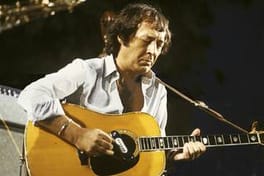
Photo: © David Redfern / CC BY-SA 2.5 (source: Wikimedia Commons)
Gábor Szabó was listed as a composer, jazz musician and jazz guitarist. Gábor Szabó was born in Budapest, Hungary on March 8, 1936. Death is recorded on February 26, 1982, at the age of 45.
My Take
Gábor Szabó is one of those names I wish more casual listeners knew. A Hungarian who fled to America and brought something genuinely foreign to jazz guitar, he blended Eastern European folk modes with jazz, pop, and rock at a time when that fusion wasn't fashionable. His tone had this hypnotic, slightly exotic shimmer that influenced people who'd later get more credit than he did. Dying at just 45 in 1982 feels like a career cut short before full recognition arrived. I admire artists who don't sand off their roots to fit in, and Szabó clearly never did. His records still sound restless and original decades later.
This take was written by generative AI, one per person, from publicly reported facts (editorial policy). It is a reading of the record, not reporting.
1. Profile
- Name (English)
- Gábor Szabó
- Name (Japanese)
- ガボール・ザボ
- Reading
- がぼーる・ざぼ
- Born
- March 8, 1936 – February 26, 1982
- Origin
- Budapest, Hungary
- Occupation
- guitarist / composer / jazz musician / jazz guitarist / recording artist
- Zodiac / Chinese zodiac
- Pisces / Rat
2. Links
- Wikipedia (English)https://en.wikipedia.org/wiki/G%C3%A1bor%20Szab%C3%B3
- Wikipedia (Japanese)https://ja.wikipedia.org/wiki/%E3%82%AC%E3%83%9C%E3%83%BC%E3%83%AB%E3%83%BB%E3%82%B6%E3%83%9C
- Wikidatahttps://www.wikidata.org/wiki/Q705784
3. About this entry
Tags
- Last updated
Facts are limited to publicly available information up to 2024; non-public or unconfirmed items are omitted. English text is machine-assisted (facts translated by Sonnet, "My Take" written by Opus 4.8). The Japanese page is the source of record.
Frequently asked questions
When was Gábor Szabó born?
Born March 8, 1936.
When did Gábor Szabó die?
Died February 26, 1982, aged 45.
Where was Gábor Szabó from?
Gábor Szabó was from Budapest, Hungary.
What did Gábor Szabó do?
Gábor Szabó worked as guitarist, composer, jazz musician, jazz guitarist, recording artist.
Guitarist — see all → · Composer — see all → · More people from Hungary →