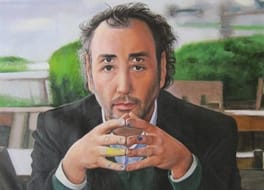
Photo: Fausto zonaro / CC BY-SA 3.0 (source: Wikimedia Commons)
Born on January 13, 1969 in Istanbul, Istanbul Province, Turkey, Genco Gülan is a sculptor, choreographer and painter. That puts Genco Gülan at 57 years old in 2026. Education on record includes Boğaziçi University.
My Take
Genco Gülan is the rare artist whose résumé refuses to sit still, sculpture, painting, photography, choreography, new media, all at once. Trained in media and communication in New York, he probes how technology reshapes identity and how we talk to one another, which is exactly the kind of restless inquiry I find compelling. That a boundary-dissolving conceptual artist should emerge from Istanbul, a city where East and West have always rubbed against each other, feels almost inevitable to me. I am drawn to people who refuse to be filed under a single label. I would happily spend an afternoon inside his head.
This take was written by generative AI, one per person, from publicly reported facts (editorial policy). It is a reading of the record, not reporting.
1. Profile
- Name (English)
- Genco Gülan
- Name (Japanese)
- ゲンジョ・グラン
- Reading
- げんじょ・ぐらん
- Born
- January 13, 1969 (age 57)
- Origin
- Istanbul, Istanbul Province, Turkey
- Occupation
- sculptor / choreographer / painter / photographer / television producer
- Zodiac / Chinese zodiac
- Capricorn / Rooster
2. Background
- University
- Boğaziçi University
3. Links
- Official sitehttps://www.gencogulan.com
- Xhttps://x.com/gencogulan
- Wikipedia (English)https://en.wikipedia.org/wiki/Genco%20Gulan
- Wikipedia (Japanese)https://ja.wikipedia.org/wiki/%E3%82%B2%E3%83%B3%E3%82%B8%E3%83%A7%E3%83%BB%E3%82%B0%E3%83%A9%E3%83%B3
- Wikidatahttps://www.wikidata.org/wiki/Q315897
4. About this entry
Tags
- Last updated
Facts are limited to publicly available information up to 2024; non-public or unconfirmed items are omitted. English text is machine-assisted (facts translated by Sonnet, "My Take" written by Opus 4.8). The Japanese page is the source of record.
Frequently asked questions
When was Genco Gülan born?
Born January 13, 1969 (age 57).
Where is Genco Gülan from?
Genco Gülan is from Istanbul, Istanbul Province, Turkey.
What does Genco Gülan do?
Genco Gülan works as sculptor, choreographer, painter, photographer, television producer.
Sculptor — see all → · Choreographer — see all → · More people from Turkey →