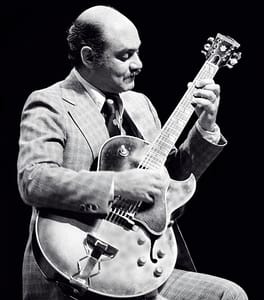
Photo: Tom Marcello Webster, New York, USA / CC BY-SA 2.0 (source: Wikimedia Commons)
Joe Pass was a composer, jazz musician and jazz guitarist. Joe Pass was born in New Brunswick, New Jersey, United States on January 13, 1929. Death is recorded on May 23, 1994, at the age of 65.
My Take
Joe Pass is simply one of the most jaw-dropping guitarists jazz ever produced, and I say that with full conviction. The man could sit down alone with a guitar and make you forget an entire band was missing — his solo recordings on the Virtuoso series are some of the most technically staggering yet emotionally warm things in the whole jazz canon. What kills me is how effortlessly he wove melody, bass lines, and chord comping simultaneously, making the instrument sound like a one-man orchestra without ever feeling showy. His partnerships with Ella Fitzgerald and Oscar Peterson weren't just sideman work — they were genuine musical conversations between equals. Born in New Jersey in 1929, passed in 1994, but the recordings he left behind remain a master class in what a single guitar is capable of in the right hands.
This take was written by generative AI, one per person, from publicly reported facts (editorial policy). It is a reading of the record, not reporting.
1. Profile
- Name (English)
- Joe Pass
- Name (Japanese)
- ジョー・パス
- Reading
- じょー・ぱす
- Born
- January 13, 1929 – May 23, 1994
- Origin
- New Brunswick, New Jersey, United States
- Occupation
- guitarist / composer / jazz musician / jazz guitarist / recording artist
- Zodiac / Chinese zodiac
- Capricorn / Snake
2. Links
- Wikipedia (English)https://en.wikipedia.org/wiki/Joe%20Pass
- Wikipedia (Japanese)https://ja.wikipedia.org/wiki/%E3%82%B8%E3%83%A7%E3%83%BC%E3%83%BB%E3%83%91%E3%82%B9
- Wikidatahttps://www.wikidata.org/wiki/Q320883
3. About this entry
Tags
- Last updated
Only publicly available facts are listed; non-public or unconfirmed items are omitted. Base data was compiled from Wikidata from June 2026 onward; ages are recalculated daily and deaths are checked against Wikidata on an ongoing basis. English text is machine-assisted (facts translated by Sonnet, "My Take" written by Opus 4.8). The Japanese page is the source of record.
Frequently asked questions
When was Joe Pass born?
Joe Pass was born on January 13, 1929.
When did Joe Pass die?
Joe Pass died on May 23, 1994, aged 65.
Where was Joe Pass from?
Joe Pass was from New Brunswick, New Jersey, United States.
What did Joe Pass do?
Joe Pass worked as guitarist, composer, jazz musician, jazz guitarist, recording artist.
Guitarist — see all → · Composer — see all → · More people from the United States → · More people born on January 13 →