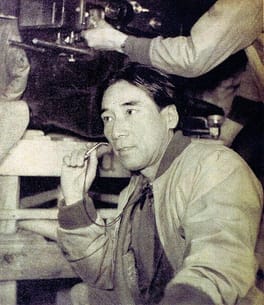
Photo: キネマ旬報社 撮影者不明 / Public domain (source: Wikimedia Commons)
My Take
Keigo Kimura is the kind of figure who reminds you just how deep the roots of Japanese cinema actually go. Born in 1903 in Mishima, Shizuoka, he came of age when film was still silent and flickering, and he spent his career shaping stories as a screenwriter and director through the entire golden era of Japanese cinema — the kind of long, unglamorous craft work that doesn't generate flashy headlines but quietly holds an industry together. He made it to 1986 without ever seeing the Heisei era, which somehow feels right for someone so thoroughly woven into the Showa fabric. His 1940 operetta Tanuki Goten started a line that ran all the way to Operetta Tanuki Goten in 2005, which says a lot about how long good work can last.
This take was written by generative AI, one per person, from publicly reported facts (editorial policy). It is a reading of the record, not reporting.
Overview
Keigo Kimura was a Japanese screenwriter and film director born on June 19, 1903, in Mishima, Shizuoka Prefecture. After leaving Waseda's preparatory school, he joined Nikkatsu, debuted as a screenwriter in 1926 and as a director in 1930, and in 1940 created the operetta film Tanuki Goten, whose line later led to Operetta Tanuki Goten (2005). He worked at Daiei's Kyoto studio from 1942 until leaving the company in 1965, and passed away on January 20, 1986, before the Heisei era began.
1. Profile
- Name (English)
- Keigo Kimura
- Name (Japanese)
- 木村恵吾
- Reading
- きむら けいご
- Born
- June 19, 1903 – January 20, 1986
- Origin
- Mishima, Shizuoka, Japan
- Occupation
- Screenwriter / Film Director
- Zodiac / Chinese zodiac
- Gemini / Rabbit
2. Links
- Wikipedia (Japanese)https://ja.wikipedia.org/wiki/%E6%9C%A8%E6%9D%91%E6%81%B5%E5%90%BE
- Wikidatahttps://www.wikidata.org/wiki/Q3194678
3. About this entry
Tags
- Last updated
Only publicly available facts are listed; non-public or unconfirmed items are omitted. Base data was compiled from Wikidata from June 2026 onward; ages are recalculated daily and deaths are checked against Wikidata on an ongoing basis. English text is machine-assisted (facts translated by Sonnet, "My Take" written by Opus 4.8). The Japanese page is the source of record.
Frequently asked questions
When was Keigo Kimura born?
Keigo Kimura was born on June 19, 1903.
When did Keigo Kimura die?
Keigo Kimura died on January 20, 1986, aged 82.
Where was Keigo Kimura from?
Keigo Kimura was from Mishima, Shizuoka, Japan.
What did Keigo Kimura do?
Keigo Kimura worked as Screenwriter, Film Director.
Screenwriter — see all → · Film Director — see all → · More people from Japan → · More people born on June 19 →