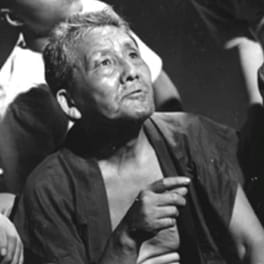
Photo: Courtesy of Toho Company, © 1954 / Public domain (source: Wikimedia Commons)
My Take
Born in January 1887 in Takasago, Hyogo — a old port town on the Harima coast — Kokuten Kodo lived through the entire arc of modern Japan: the Meiji reformation, the Taisho idealism, the long brutal stretch of Showa. He was acting before talkies existed, which honestly blows my mind a little. I don't know the full list of his roles, and the record on him is thin enough that I won't pretend otherwise, but any actor who planted his flag in the 1880s and kept working clear through to 1960 earned something that no award ceremony can hand you. That's just staying power — staying through war, through the total reinvention of Japanese cinema, through everything.
This take was written by generative AI, one per person, from publicly reported facts (editorial policy). It is a reading of the record, not reporting.
Overview
Kokuten Kōdō (born January 29, 1887, in Takasago, Hyogo Prefecture, Japan; died January 22, 1960) was a Japanese actor who lived and worked through the Meiji, Taisho, and Showa eras. He passed away at the age of 72, having pursued an acting career that spanned a period of profound change in Japanese film and theater.
1. Profile
- Name (English)
- Kokuten Kōdō
- Name (Japanese)
- 高堂国典
- Reading
- こうどう くにのり
- Born
- January 29, 1887 – January 22, 1960
- Origin
- Takasago, Hyogo Prefecture, Japan
- Occupation
- Actor
- Zodiac / Chinese zodiac
- Aquarius / Boar
2. Links
- Wikipedia (Japanese)https://ja.wikipedia.org/wiki/%E9%AB%98%E5%A0%82%E5%9B%BD%E5%85%B8
- Wikidatahttps://www.wikidata.org/wiki/Q3198422
3. About this entry
Tags
- Last updated
Facts are limited to publicly available information up to 2024; non-public or unconfirmed items are omitted. English text is machine-assisted (facts translated by Sonnet, "My Take" written by Opus 4.8). The Japanese page is the source of record.
Frequently asked questions
When was Kokuten Kōdō born?
Born January 29, 1887.
When did Kokuten Kōdō die?
Died January 22, 1960, aged 72.
Where was Kokuten Kōdō from?
Kokuten Kōdō was from Takasago, Hyogo Prefecture, Japan.
What did Kokuten Kōdō do?
Kokuten Kōdō worked as Actor.