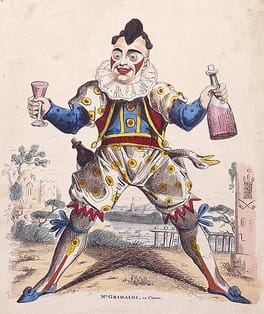
Photo: George Cruikshank (27 September 1792 – 1 February 1878) / Public domain (source: Wikimedia Commons)
Public records list Joseph Grimaldi as a dancer, clown and singer. Joseph Grimaldi was born in London, United Kingdom on December 18, 1778. Death is recorded on May 31, 1837, at the age of 58.
My Take
Joseph Grimaldi fascinates me because so much of modern clowning traces straight back to him. As the defining entertainer of the Regency era, he reshaped the Clown of the harlequinade at Drury Lane, Sadler's Wells and Covent Garden into something audiences adored. What I admire most is the physical and emotional cost behind that laughter; comedians who give their bodies to the crowd rarely get their due. Two centuries on, the white-faced clown still carries his DNA. I think of him as a true founding father of comic performance, far more influential than his name now suggests.
This take was written by generative AI, one per person, from publicly reported facts (editorial policy). It is a reading of the record, not reporting.
1. Profile
- Name (English)
- Joseph Grimaldi
- Name (Japanese)
- ジョーゼフ・グリマルディ
- Reading
- じょーぜふ・ぐりまるでぃ
- Born
- December 18, 1778 – May 31, 1837
- Origin
- London, United Kingdom
- Occupation
- dancer / clown / singer / circus performer / stage actor
- Zodiac / Chinese zodiac
- Sagittarius / Dog
2. Links
3. About this entry
Tags
- Last updated
Facts are limited to publicly available information up to 2024; non-public or unconfirmed items are omitted. English text is machine-assisted (facts translated by Sonnet, "My Take" written by Opus 4.8). The Japanese page is the source of record.
Frequently asked questions
When was Joseph Grimaldi born?
Joseph Grimaldi was born on December 18, 1778.
When did Joseph Grimaldi die?
Joseph Grimaldi died on May 31, 1837, aged 58.
Where was Joseph Grimaldi from?
Joseph Grimaldi was from London, United Kingdom.
What did Joseph Grimaldi do?
Joseph Grimaldi worked as dancer, clown, singer, circus performer, stage actor.
Dancer — see all → · More people from the United Kingdom → · More people born on December 18 →