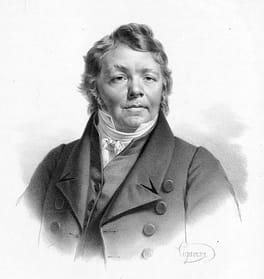
Photo: After Pierre-Roch Vigneron / Public domain (source: Wikimedia Commons)
Born on November 14, 1778 in Bratislava, Bratislava Region, Slovakia, Johann Nepomuk Hummel was a composer, conductor and pianist. Death is recorded on October 17, 1837, at the age of 58. Johann Nepomuk Hummel studied at University of Music and Performing Arts Vienna. Awards on record include Knight of the Legion of Honour (1826).
My Take
Johann Nepomuk Hummel sits at one of the most fascinating hinges in music history, and that is precisely why I find him so compelling. A student of Mozart who also learned from Salieri and Haydn, he carried the elegance of the Classical era straight into the dawn of Romanticism. To me his real achievement is that bridge-building role, easy to overlook yet essential to everything that followed. Born in Bratislava and refined in Vienna, honored with the Legion of Honour, he was a virtuoso whose music still seduces the pianists who play it. I reserve my highest respect for figures who quietly pave the road forward.
This take was written by generative AI, one per person, from publicly reported facts (editorial policy). It is a reading of the record, not reporting.
1. Profile
- Name (English)
- Johann Nepomuk Hummel
- Name (Japanese)
- ヨハン・ネポムク・フンメル
- Reading
- よはん・ねぽむく・ふんめる
- Born
- November 14, 1778 – October 17, 1837
- Origin
- Bratislava, Bratislava Region, Slovakia
- Occupation
- composer / conductor / pianist / concertmaster / music educator
- Zodiac / Chinese zodiac
- Scorpio / Dog
2. Background
- University
- University of Music and Performing Arts Vienna
Awards & achievements
- 1826 Knight of the Legion of Honour
3. Links
4. About this entry
Tags
- Last updated
Facts are limited to publicly available information up to 2024; non-public or unconfirmed items are omitted. English text is machine-assisted (facts translated by Sonnet, "My Take" written by Opus 4.8). The Japanese page is the source of record.
Frequently asked questions
When was Johann Nepomuk Hummel born?
Johann Nepomuk Hummel was born on November 14, 1778.
When did Johann Nepomuk Hummel die?
Johann Nepomuk Hummel died on October 17, 1837, aged 58.
Where was Johann Nepomuk Hummel from?
Johann Nepomuk Hummel was from Bratislava, Bratislava Region, Slovakia.
What did Johann Nepomuk Hummel do?
Johann Nepomuk Hummel worked as composer, conductor, pianist, concertmaster, music educator.
Where did Johann Nepomuk Hummel study?
Johann Nepomuk Hummel attended University of Music and Performing Arts Vienna.
Composer — see all → · Conductor — see all → · More people from Slovakia → · More people born on November 14 →