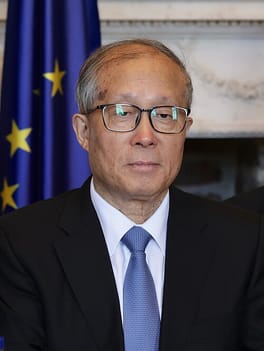
Photo: Houses of the Oireachtas from Ireland / CC BY 2.0 (source: Wikimedia Commons)
Li Hongzhong was born on August 1, 1956 in Shenyang, People's Republic of China. Li Hongzhong is a politician. The age as of 2026 is 70. Schooling on record includes Jilin University.
My Take
Li Hongzhong sits near the very center of Chinese power as first-ranking vice chairperson of the NPC Standing Committee and a Politburo member, yet what I find most telling is the path that got him there. His years in Guangdong, rising from mayor to party secretary of Shenzhen, mean he helped steward the very city that symbolizes China's reform era. That blend of academic grounding from Jilin University and hands-on regional governance is the kind of dual track that builds durable political careers. I observe figures like him from a distance with detached curiosity, conscious of how much one administrator can shape an enormous nation.
This take was written by generative AI, one per person, from publicly reported facts (editorial policy). It is a reading of the record, not reporting.
1. Profile
- Name (English)
- Li Hongzhong
- Name (Japanese)
- 李鴻忠
- Reading
- り・こうちゅう
- Born
- August 1, 1956 (age 70)
- Origin
- Shenyang, People's Republic of China
- Occupation
- politician
- Zodiac / Chinese zodiac
- Leo / Monkey
2. Background
- University
- Jilin University
3. Links
- Wikipedia (English)https://en.wikipedia.org/wiki/Li%20Hongzhong
- Wikipedia (Japanese)https://ja.wikipedia.org/wiki/%E6%9D%8E%E9%B4%BB%E5%BF%A0
- Wikidatahttps://www.wikidata.org/wiki/Q1822563
4. About this entry
Tags
- Last updated
Facts are limited to publicly available information up to 2024; non-public or unconfirmed items are omitted. English text is machine-assisted (facts translated by Sonnet, "My Take" written by Opus 4.8). The Japanese page is the source of record.
Frequently asked questions
When was Li Hongzhong born?
Born August 1, 1956 (age 70).
Where is Li Hongzhong from?
Li Hongzhong is from Shenyang, People's Republic of China.
What does Li Hongzhong do?
Li Hongzhong works as politician.
Politician — see all → · More people from the People's Republic of China →